Most people think a business idea must be huge or clever. But that’s often wrong.
According to the Bureau of Labour Statistics, about 20% of new U.S. businesses fail in their first year. The strongest ideas often come from noticing tiny, everyday problems. Maybe it’s a slow app, a missing tool, or a small annoyance at work or at home.
So, how to come up with a business idea that works?
In 2026, people will want solutions that save time, feel easy, or make life fun. You don’t need a million-dollar plan to start. You just need observation and action.
I'm here to give you practical ways to spot real problems and create business ideas that get people excited and ready to pay.
Curious to know the details? Let’s get to it!
Why Most People Struggle to Find Business Ideas
Most people don't know how to come up with a good business idea.
Many people want to start a business, but when they sit down to think, nothing clear comes out. Their mind goes quiet, and they feel stuck.
In true words, this is more common than people think.
One big reason is fear.
Usually, people get scared that their idea might fail. They worry it will cost money or make them look silly. This fear blocks fresh thoughts.
On a Reddit thread in r/Entrepreneur, one user shared that they “talk themselves out of every idea” because they feel it won’t work before they even try.

Another reason is that people wait for a perfect idea.
They think it must be brand new or never seen before. But good ideas often come from small daily problems. Simple things people deal with at home, school, or at work.
Many people also overthink too much.
They sit for hours trying to force an idea. But ideas don’t grow in pressure. They grow when you notice real problems around you.
Time is another issue.
People work long hours. They take care of kids. They get tired. When your mind is tired, it’s hard to be creative. So the idea hunt feels slow.
Some people also don’t know where to look.
They search for “business ideas” instead of “real problems.” Strong business ideas hide inside daily life. Things that feel slow, costly, or annoying.
And sometimes, people feel they are not skilled enough.
They think they must know everything before they start. But most founders learn little by little as they build.
So at the end, people struggle because of fear, overthinking, lack of time, and waiting for the perfect moment.
But once you start looking at real problems, ideas begin to show up.
How to Come Up with a Business Idea That Really Works in 2026 (11 Proven Methods)
It all started with a simple question: “What if I could create something people really need?” That’s how many successful businesses are born!
One small idea that grows into something big. But finding that isn’t always easy. That’s why I am here to guide you on how to come up with a business idea that will work.
Method 1: Solve a Real, Everyday Pain

Many great business ideas start with a simple problem. That is to solve something that annoys people daily.
Maybe it’s a task that wastes time, or a small chore that costs money, or a stress that stacks up. By watching your own life and others’, you can spot these pains.
That's why, begin by talking to people. Ask friends, family, or coworkers:
“What do you wish was easier or faster?”
Use short chats or a quick online survey. Try to capture their exact words. These real phrases help you shape your description and solution.
Once you identify a pain, create a very small test fix. It could be a simple prototype, a one-page landing page, or even just a mock-up.
Then present it to the people who complained. Track what they do:
Do they click?
Sign up?
Say “yes, I’d pay”? Use that feedback to refine your idea.
You can try these steps:
Watch daily routines for 3 days and write down annoyances.
Ask 10 people the same two questions about what bugs them.
Build a simple landing page or sample of your solution.
This method works because people are willing to pay for relief. When your solution removes a real annoyance, it feels valuable.
Your goal: be able to explain the “pain + fix” in one short sentence. Keep the problem and solution clear.
Method 2: Ride a Big Trend: AI, Remote Work, and the Creator Economy

Actually, riding a growing trend gives you more space to build.
While you are confused about how to come up with a new business idea, always remember it is 2026.
In 2026, AI tools, remote work, and the creator economy remain powerful engines of change. These macro shifts open many little gaps that aren’t yet solved well.
Use data to pick a trend wisely.
For example, the creator economy is massive: Grand View Research estimates it was US$205 billion in 2024 and could grow to US$1,345.5 billion by 2033.
This shows a huge opportunity. Remote work and hybrid models also create needs: onboarding, productivity tools, and culture building.
Next, match the trend to your strengths. If you’re good at writing, create a course or newsletter for creators.
If you code a little, build a small AI-powered helper tool. If you’ve been managing teams, offer tools or guides for remote teams.
Then test quickly. Make a minimum offer, like a simple digital product or a microservice, and sell it to a small audience.
Promote using social ads, collaboration, or creator referrals. Measure early: if people buy, scale slowly. If not, tweak the offer or explore another sub-need.
Keep a few factors in mind:
Focus on one trend, not too many.
Break the trend into smaller micro‑needs.
Launch a test product or offer within 30 days.
Method 3: Start with a Niche Market
A niche market means a small, specific group of people who share common needs. Focusing on a niche helps you be clear, reach people directly, and avoid fierce competition.
How to find a niche and act:
Find a community: Look for subreddits, Facebook groups, forums, or online communities where your potential audience hangs out.
Observe conversations: Read posts, comments, and complaints carefully. Note repeated problems or frustrations.
Pick one urgent problem: Choose the most pressing issue you can solve.
Build a pilot: Create a small version of your product or service. Keep it simple and focused.
Invite users to test: Share your pilot with a select group of community members and gather their feedback.
Use their language: Adapt your messaging and product to match how your niche describes the problem.
This approach helps you keep your message simple and relevant.
Follow this checklist:
Join 1 active community.
List 5 recurring problems you notice.
Build a small, focused solution for one problem.
By starting a niche, you build trust, get early users, and learn faster and only then can you think about scaling beyond that group.
But why does it work nicely? Of course! It helps to:
Keeps your message simple and relevant
Connects deeply with people who actually care
Lowers marketing costs because you target the right audience
Builds trust and gives you early users
Let's you learn fast before scaling to a broader market
Method 4: Use AI to Accelerate Research and Testing

AI tools are super helpful for founders, undoubtedly, right?
They can speed up research, generate questions, and even write drafts of messages or landing pages. Use AI as a smart helper, not your boss.
First, ask AI to list 3–5 pain themes in your target niche.
Then ask it to generate 10 interview questions you can use with real people. Conduct interviews based on those questions. Gather honest answers.
Next, use AI to write two versions of a landing page: version A and version B.
Let AI suggest headlines, sub‑heads, and call-to-actions. Tweak the draft yourself to make it feel real and human. Then run very cheap ads ($50–$100) to drive a little traffic to both pages. Track which page gets more clicks or signups.
This gives you early signals about what resonates. Because AI helped you build both research and test assets fast, you save time and money.
Use these tools:
AI for idea‑theme generation
AI for interview question creation
AI for landing‑page copy
Remember not to trust AI blindly. Always validate with real people. Use data from interviews and ad tests to guide your decisions, not just the AI output.
Method 5: Build a Lean Minimum Viable Product (MVP)

An MVP is a very simple version of your product, just enough to test the core value. It helps you prove if real people care before building a full product.
To build an MVP, choose the one feature that you believe solves the main problem.
Don’t try to build everything. Keep it minimal. Use tools like no‑code builders, simple web apps, or basic prototypes.
Once your MVP is ready, invite 10 to 20 early users to try it.
Then, ask them to do the main action: maybe use the feature, click around, or give feedback. Observe how they use it. Ask what they liked and what confused them.
Measure three key signals:
Clicks (how many people try)
Signups (how many create an account)
Repeat use (how many come back)
If users engage, that's a strong signal. If they drop off, ask why. Use their input to improve. Then rebuild, test, and repeat.
An MVP reduces risk. It saves money. It also helps you pivot fast when something doesn’t work. Many successful businesses grew from MVPs, not from polished first versions.
Method 6: Validate by Pre‑Selling and Using Landing Pages
Pre‑selling is a smart way to test demand before building fully. Instead of guessing what people want, ask them to pay or to join a waiting list first.
Here are the 6 simple steps to pre-sell your idea:
1. Make a landing page: Share the problem your product solves. Show your solution in simple words and add an early-bird price or bonus.
2. Keep your message short: Use clear, honest lines. Explain what the buyer gets right away.
3. Send people to the page: Share it with friends, past customers, or your email list. Post on social media and small online groups.
4. Run small test ads: Use a tiny budget. See if real people click and show interest.
5. Measure the response: Track sign-ups or early payments. If many join, your idea has strong demand.
6. Learn and adjust: If few respond, check what went wrong. Fix the price, message, or offer, then test again.
One Reddit founder said many fail by building too much before validating. Building based on pre-sales saves money, because you only build once real buyers are there.
Method 7: Build for the Creator & Micro-Influencer Market
Creators are everywhere now. YouTubers, podcasters, Instagrammers, writers, they all need tools, systems, and help to earn. This is a growing market with real needs.
Start by selecting a niche for your creator: consider options such as coaches, micro-influencers, or educators.
Talk to people in that niche. Ask them what tasks take most time or what’s blocking them from earning more.
Then design a product or service. It may be a content repurposing tool, a membership platform for their audience, or a simple email-marketing template.
After that, offer a free or low-cost trial to a few creators. Let them test and give feedback.
If they like it, you can charge a subscription. Because creators often pay monthly for tools that help them earn, you build recurring income.
This model works because creators value anything that saves them time, makes them money, or helps them grow their audience.
So, build small, test fast, and scale with trusted creators.
Method 8: Automate Repetitive Tasks for Small Businesses

Many small businesses still run manually.
Owners spend too much time on repetitive tasks: invoicing, emails, client follow-ups, and stock alerts. That’s where your business idea can fit.
First, talk to small business owners. Ask about their daily workflow and where they waste time.
Which parts frustrate them?
Which tasks feel like they could be automated cheaply?
Based on what you learn, pick one repetitive task to solve.
For example, you could build a tool that sends follow-up emails automatically when a job is done. Or a simple app that alerts when inventory is low. Keep the tool lightweight and focused.
To make it usable, integrate with common platforms: Google Sheets, Shopify, Zapier, or other simple tools.
Then, provide step‑by‑step setup help, like a short video or a guide.
Measure success through two key metrics: time saved and error reduction. If business owners use it, and they report less work or fewer mistakes, that’s a strong win.
Remember: Start small with a few local or niche businesses. Once you validate, charge a small subscription or flat monthly fee. This gives you recurring revenue, and small businesses love tools that save handfuls of hours.
Method 9: Offer a Subscription or Membership Model

Recurring revenue is powerful. When customers pay every month, you can plan better and grow steadily. A subscription model works in many areas:
Tools
Content
Coaching, or community.
Think about what people need regularly. For example:
A tool for creators (editing, scheduling, analytics)
A membership with exclusive content (articles, videos)
Ongoing training or coaching (weekly lessons, group calls)
Set a reasonable price. Offer a free trial or a discounted first month so people try you out. Make it very clear what they pay for and what they gain. Show monthly value.
And then, your next job is to retain customers.
Provide a small but real “reward” or update every month: a new tip, a feature, or content. Use simple billing and clear cancellation policies; people stay when trust is clear.
Building a membership or subscription model gives stability.
As you grow your user base, you can add levels (basic, premium) or features. It's easier to scale than one-off product sales.
This model works well because once users see the monthly value, they keep paying. Over time, that recurring revenue supports your growth and gives you the freedom to improve.
Also read: 10 Profitable Online Coaching Businesses for Coaches
👉Build membership business now!
Method 10: Build a Green or Clean‑Tech Business
Clean technology is not just a trend; it’s a long-term shift.
Governments, businesses, and individuals are investing in green energy, energy-efficient homes, and sustainable technologies. That opens real business opportunities.
Global energy investment is huge now. The IEA says clean energy investments could hit US$ 3.3 trillion in 2025, significantly more than fossil fuel investment.
This means green projects are not niche; they’re mainstream.
Then, think locally first. What green needs are in your city or region?
People may want home energy audits. Maybe small businesses want help planning solar or electric‑vehicle charging. Identify one need and focus on it.
Design a simple offer:
A green audit, a small-scale install
Or a planning service.
Test with a few clients. Track benefits like energy saved or cost reduced. Then expand once people pay or refer.
Another angle: green consulting or education. Teach homeowners or businesses how to reduce energy use. Build a community or membership around sustainability.
This method works because clean energy demand is real and growing. If you help people save on utility bills or go green, they’ll pay. And your business helps the planet too.
Method 11: Start Locally with a Community‑Led Business
Some of the best business ideas come from your own neighborhood. Local problems are real, immediate, and often ignored by big companies.
A small, community‑led business can be very stable. People like services that are close, trustworthy, and easy to access.

You can follow the process below:
Start by exploring your local area. Talk to shop owners, neighbours, and family. Ask simple questions: “What tasks take too long?” or “What service would make your life easier?”
Watch daily routines and notice small frustrations. Even tiny needs can become a profitable business.
Check local social media groups, too. WhatsApp groups, Facebook communities, and Telegram channels often show repeated complaints. People ask for help or discuss issues that no one is solving. These are your opportunities. Take note of what appears most often.
Once you identify a clear need, create a simple service. This could be home repairs, appliance pick-up and delivery, tutoring for local exams, or even helping local shops with small tasks.
Start small. Offer your service to a few people first. Use flyers, word-of-mouth, and local posts to spread awareness.
Focus on trust and quality. Local people value businesses they know. Good work, positive reviews, and repeat clients help your reputation. Scaling is gradual. You don’t need big investments.
Once your business works well locally, you can expand to nearby neighbourhoods. Start small, build trust, and grow steadily.
This system works because local needs are specific, and people pay for convenience. By helping your community first, you build loyal customers and a business that lasts.
Now, Create Your Business Idea List
After exploring different methods and opportunities, the next step is to create a list of potential business ideas.
Check out the table below:

Usually, the goal of this list is to have a pool of ideas you can test.
Even if most don’t work out, the act of creating and reviewing them teaches you what people need and what you enjoy building.
Keep updating this list over time as you discover new trends or problems, because business opportunities are always evolving.
Next, Validate and Narrow Down Your List
Once your business idea list is ready, the next step is to validate and narrow it down. Here how, you can do it:
Pick top 2–3 ideas: Choose the ones that feel most promising after scoring and feedback.
Validate demand: Research competitors and see if similar products/services exist. Use surveys, polls, or online communities to check if people would actually pay for it.
Test with a small experiment: Create a landing page, pre-sell, or build a minimum viable product (MVP). Focus on one key feature. Offer it to a small group and collect feedback.
Measure and analyze results: Check metrics like sign-ups, pre-orders, or usage. See what works and what doesn’t. Learn why some ideas fail or succeed.
Refine your idea: Based on feedback, tweak your product, service, or offer. Keep improving until it meets real demand.
Take action: Once you confirm interest, start building the full solution. Keep costs low, iterate quickly, and focus on serving real customers.
Keep observing and iterating: Even after launching, watch trends, communities, and customer feedback. Add new features or explore related ideas to grow your business steadily.
The Secret Ingredients of a Successful Business Idea
As we all know, the best ideas aren’t just random thoughts; they have certain secret ingredients that make them successful.
In fact, many new businesses don’t survive: according to the U.S. Bureau of Labour Statistics, around 20% of startups fail within their first year and about 65% fail by their tenth year.
These hard numbers show just how tough it is to turn a spark into a real business.
In this case, the right elements help your idea solve real problems, attract customers, and grow into a profitable business.
Below, I’ll explain the key ingredients that every successful business idea needs, so you can build something with real staying power.
Solves a Real Problem
A great idea starts with a real pain people feel. It fixes something slow, costly, or annoying. When you make life easier, folks are willing to pay.
Many founders often say on Quora that the “best ideas come from solving your own problems first.”
Has Defined Customers
You should know exactly who needs the idea. Kids? Parents? Students? Workers? Clear users make your idea stronger, because you build for real people, not “everyone.”
Simple to Explain
If you can share your idea in one short line, it means the idea is clean. When it’s simple, people remember it. And simple ideas are easier to build and test.
Real Demand Already Exists
People must already be trying to fix the problem. Maybe they use old tools or messy hacks. When folks already spend time or money on something, the need is real.
Matches Your Skills or Passion
When the idea lines up with what you enjoy or know, it feels lighter. You move faster. You stay steady when things get tough.
Room to Grow Over Time
A strong idea can start small but grow slowly as more people join. It should have space to add new features, new users, or new markets without breaking your budget.
Affordable to Start
Good ideas don’t always need big money. Many smart founders pick ideas that need little cash at the start. This makes testing easier and risk smaller.
Easy to Test Quickly
You should be able to test the idea fast, without a big cost. A landing page, a simple sample, or talking to real people helps you learn early.
Low Competition Pressure
You don’t need to avoid competition. But strong ideas often live in spaces where people are unhappy with current choices. That gives you room to stand out.
Fits Future Trends
A strong idea stays useful in the coming years. It matches how people live, work, shop, or learn. If the idea fits where the world is heading, it stands longer.
You Can Make Money From It
A business idea must be something people will pay for. Not just like. Not just enjoy. They must feel it’s worth their money.
What Type of Platforms Can Help You Launch Your Business Idea in 2026
Launching a new idea in 2026 can feel big, but with proper knowledge and using the right platforms, you can launch a great business.
So far, I've shared different ideas on how to come up with a business idea.
The good news is that you no longer need to build everything from scratch or hire a big team. Nowadays, there are several platforms that let solo founders and small teams launch real businesses in weeks. Let's see the most effective types of platforms that can help you turn your idea into a working business.
1. All-in-One Business Platforms
All-in-one platforms combine multiple tools in one place. They provide a website builder, payment options, email features, membership tools, and sometimes communities.
These types of platforms are best for online courses, coaching businesses, memberships, creator products, or digital services.
Instead of connecting 5–6 tools, you launch everything from one dashboard. This is ideal if you want to validate an idea quickly without technical headaches. For example, you can get started with an all-in-one platform like EzyCourse, which lets you create websites, sell courses, run coaching programs, monetize with memberships, build communities, and so on.
👉Start selling your digital products!
2. No-Code & Low-Code Builders
No-code tools allow you to build apps, workflows, and MVPs without heavy programming.
You can build simple SaaS tools, automation systems, internal dashboards, or client portals with this type of platform.
If your idea involves automating a task or solving a workflow problem, no-code platforms are one of the smartest ways to start.
For example, EzyStudio is an AI-powered no-code website builder. With this platform, you can easily create a complete website or portal within a few minutes.
3. Creator & Monetization Platforms
If your idea involves content, audience, or personal brand, you should go for a content monetization platform for creators.
This type of platform helps you sell digital products, run paid communities, offer subscriptions, and host live sessions or events. In 2026, creators don’t just “post content.” They run businesses. These platforms turn attention into income. For example, you can utilise YouTube. It is a powerful content monetization platform offering multiple ways to earn money. You can generate income through AdSense ads, Super Thanks, Super Chat, and channel memberships features.
4. E-Commerce & Product Platforms
For physical or digital products, modern e-commerce platforms handle payments, logistics, and storefronts.
If you are planning to sell print-on-demand products, niche physical goods, or digital downloads, or subscription boxes, you can either go for an eCommerce platform. If you want to sell digital products on a marketplace, platforms like Etsy can be a sweet spot for you to start.
Otherwise, while your business idea involves selling something tangible (or downloadable) from your own website, platforms like Shopify or Gumroad can help you.
5. Community-First Platforms
Communities are becoming businesses on their own. Platforms focused on discussion, engagement, and belonging help founders build loyalty early.
Many successful businesses in 2026 start as communities first, then layer products, services, or subscriptions on top. There are several online community platforms like Circle, Skool, or EzyCommunity that help you create a fully branded online community website.
👉Launch your paid community now!
How to Choose the Right Platform According to Your Business Idea
Before picking a platform, ask yourself:
What am I selling? (product, service, content, access)
Do I need speed or flexibility?
How technical am I?
Do I want recurring revenue?
Will I need community or engagement features?
The best platform is not the most powerful one, but the one that helps you launch, test, and earn quickly.
What is EzyCourse and How It Can Help You Launch Your Business?

Actually, EzyCourse is an all-in-one platform that helps you build and sell online products. It’s made for creators, teachers, coaches, and small business owners.
It gives you one simple place to build, test, and grow your idea without jumping between many tools. This helps you save time, money, and energy.
Suppose your idea is to teach people how to start a side business. On EzyCourse, you can:
Build a step-by-step course with lessons and assignments
Host a private community for peer discussion
Sell digital templates or premium coaching sessions
Track revenue, engagement, and user progress in one dashboard
In fact, with EzyCourse, you can turn your idea into something real fast. You can make online courses, sell digital products, run a complete membership program or start a small coaching program.
The setup is quick, and you don’t need tech skills. Just drag, drop, and publish. This makes it perfect when you want to test your idea early and see if people like it.
You can also build a small community around your idea. EzyCourse has groups, chats, and forums where your audience can talk and share feedback. This helps you learn what people need before you grow bigger.
Plus, if you want to sell, the platform has built-in payments, email marketing tools, and even a mobile app. This means you can get a white-label mobile app for your business and offer your content on the app for your users.
All in all, EzyCourse gives you everything you need in one place.
👉Create your website with EzyCourse!
Why EzyCourse Is the Best Platform to Launch a Business?
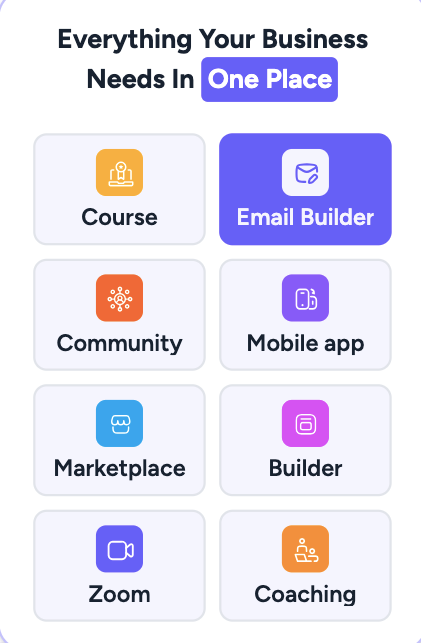
EzyCourse brings all your tools into one place. You can create courses, run coaching, build memberships, host events, and sell products. You don’t need multiple apps. This saves time and makes managing your idea easier.
You can build a website without coding. Use 250+ ready templates. Drag and drop your content, organize lessons, and design your pages. Your idea can be live online in just a few hours.
Your audience can access courses, live sessions, and communities on their phones. Mobile access makes learning easy. It also keeps people engaged and coming back.
Create paid membership plans or subscription content. This gives you a steady income from the start. Members get exclusive content, and you build loyalty.
Offer one-on-one or group coaching easily. The booking system manages schedules and reminders. This makes your coaching look professional and saves you time.
Build a private community for your audience. Use group or private chats for interaction. People can ask questions, share ideas, and support each other.
Host webinars, workshops, or live Q&As. You can manage registration, reminders, and follow-ups. Live sessions help you build trust and connect with your audience.
Sell eBooks, templates, tools, or physical items. You can add multiple products easily. This lets your idea earn money in more ways.
Send newsletters, offers, or drip campaigns from the platform. Track who opens and clicks. Email marketing helps you reach your audience without extra tools.
See course completions, revenue, and engagement in one dashboard. Use data to improve your courses and marketing. This helps your idea grow efficiently.
EzyCourse has a marketplace for listing your courses. This brings your idea to new learners outside your network. You get early users and fast feedback to improve your offerings.
Store all course content in one place. Videos and audio can be streamed or downloaded. This keeps your courses organized and easy for learners to use.
Create blogs to share tips, tutorials, or updates. Blogs attract new users and build authority. They also help promote your courses and coaching services.
Manage registrations, reminders, and follow-ups for live events. You can run workshops or paid webinars professionally. This increases engagement and makes your idea more credible.
EzyCourse Pricing

👉Launch your business website now!
Ignore These Mistakes When Finding Business Ideas (With Fixes)
Actually, many people struggle to find a business idea because they overthink, copy others, or chase “big” but useless ideas.
Below, I am going to cover the key mistakes people make when searching for business ideas and show practical ways to fix them.
1. Chasing Ideas Without Real Problems
Many people look for “cool” ideas instead of solving real problems. They focus on what seems trendy or profitable, not what people actually need.
How To Fix: Ask people about their pain points. The best business ideas come from real problems that bother real people. Small, everyday annoyances often make the most successful businesses.
2. Trying to Be Too Original
Some try to create something entirely new, thinking originality is the key. It can waste time and lead to products no one wants.
How To Fix: Look at existing solutions and think how to improve them. Better service, faster delivery, simpler process, or lower cost can often beat a completely new idea. Use small improvements to stand out.
3. Ignoring Market Demand
People sometimes pick ideas based on personal preference without checking if others will pay for it. They assume their idea is great, but no one else cares.
How To Fix: Validate your idea before building. Use surveys, pre-sales, landing pages, or polls. Check if people are willing to spend money. Real demand prevents wasted time and money.
4. Focusing on Too Many Ideas at Once
Jumping between multiple ideas dilutes focus. Many never test anything properly because attention is split.
How To Fix: Narrow your list to 1–3 strong ideas. Test them one at a time with small experiments. Focused effort brings better results and faster learning.
5. Relying Only on Personal Opinion
Assuming your idea is good because you like it can be misleading. Personal bias often blocks seeing problems others face.
How To Fix: Ask potential customers, community members, or online forums for feedback. Reddit and Quora are good sources. Listen to repeated complaints and adjust your idea accordingly.
6. Ignoring Trends and Shifts
Some ignore growing trends or market changes. They stick to old methods and miss opportunities in fast-growing areas like AI, remote work, or the creator economy.
How To Fix: Track trends and industry reports. Look for new problems created by changes in technology, lifestyle, or consumer behavior. Adapting to trends gives a head start.
7. Waiting for Perfect Ideas
Many people wait too long for the “perfect” idea. By then, markets may have shifted or competitors already filled the gap.
How To Fix: Start small with a minimum viable product (MVP). Test quickly, learn from feedback, and improve. Action beats endless planning.
8. Underestimating Local and Niche Opportunities
Some overlook small or local markets, thinking only big markets are profitable. They miss opportunities where competition is low and trust is high.
How To Fix: Look at niches and local communities. Solve problems for specific groups first. Once proven, you can expand.
Final Words: How to Come Up with a Business Idea?
A strong business idea starts small and solves a real problem. Don’t wait for perfection, huge concept. Look around you and notice the little annoyances people face.
Combine those observations with what you know or enjoy doing, and you can create something useful. Test your idea early, listen to feedback, and adjust quickly.
In 2026, people want solutions that are simple, fast, and practical. Even small ideas, done right, can turn into big opportunities.
Remember, success comes from action and learning, not waiting for inspiration. Try out new ideas, spot problems, and improve your approach to build an enjoyable business.
Finally, if you want to take help from a platform to automate your digital product-selling business, then you can get started with an all-in-one platform like EzyCourse. The platform will help you create a complete website within a few minutes and host your online courses, coaching, or memberships without hassle. You can build an engaging community and offer your content in a mobile app for free with this platform. Seems interesting? Get started with EzyCourse for free now and reach your target audience quickly, and start earning.