Key takeaways
We've tested 15 group coaching platforms against some specific criteria.
If you need an all-in-one platform that offers 1:1 and group coaching, courses, communities, live streaming, and white-label apps, EzyCourse is the strongest pick.
Dedicated coaching platforms like Simply.Coach, CoachAccountable, and CoachVantage are built around client management, scheduling, and goal tracking. They are better as a focused group coaching software if you don't sell content.
All-in-one creator platforms (Kajabi, Upcoach) bundle marketing with group coaching tools, but pricing is high.
Pure video tools like Google Meet and GoTo Meeting handle the call but leave you stitching scheduling, payments, and community elsewhere.
Pick based on what you actually run. Structured cohorts need community and progress features; loose group calls just need solid video plus a scheduler.
Not a generic overview, originally researched by the author.
Running group coaching online means stitching together video calls, scheduling, payments, a community, and progress tracking.
Managing these tasks would require you to choose the right group coaching platform.
The challenge isn't finding a platform.
It's finding the right one for how you actually coach.
Structured cohorts, ongoing memberships, manager training, or a creator-led program built around content.
In this guide, I'll review 15 of the best group coaching platforms tested in 2026, ranked by who they fit best. So, you will know which one is best for solo coaches, corporate teams, content creators, and everyone in between.
In this article
What is a group coaching platform
15 platforms compared, ranked by use case
How to choose a coaching platform that fits your business
Group coaching pricing, structure, and frequently asked questions
What is a group coaching platform?

A group coaching platform is software that lets a coach run sessions, share resources, and manage multiple clients at once instead of one at a time. It usually combines video calls, scheduling, progress tracking, payments, and a community space.
So the coach delivers the entire program in one tool instead of stitching together Zoom, Calendly, Stripe, and Slack.
The good ones do three jobs well:
- host live sessions
- organize the cohort
- and keep clients accountable between calls.
Everything else is differentiation. Some lean toward client management, some toward content, and some try to do both as an all in one coaching platform.
👉Read more: 10 Best Successful Group Coaching Programs and Structure Examples
15 best group coaching platforms compared in 2026
Each platform below is positioned by who it actually fits. Pricing reflects publicly listed plans at the time of writing. So you should verify on the platform's site before purchasing, since pricing shifts often.
Transparency note: EzyCourse is our platform. So yes, we have a horse in this race. To keep this guide honest, I tested every platform on the same criteria: features, pricing, ease of use, and real creator feedback. Where EzyCourse falls short, I say so. Where competitors do something better, I say that too. Our goal is to help you pick the right platform, even if that's not us.
1. EzyCourse (Best all-in-one for online coaches, tutors, and course creators)
Best for: Coaches who sell programs, run group calls, and want a community plus a branded mobile app
Starting price: $55/month (Essential)
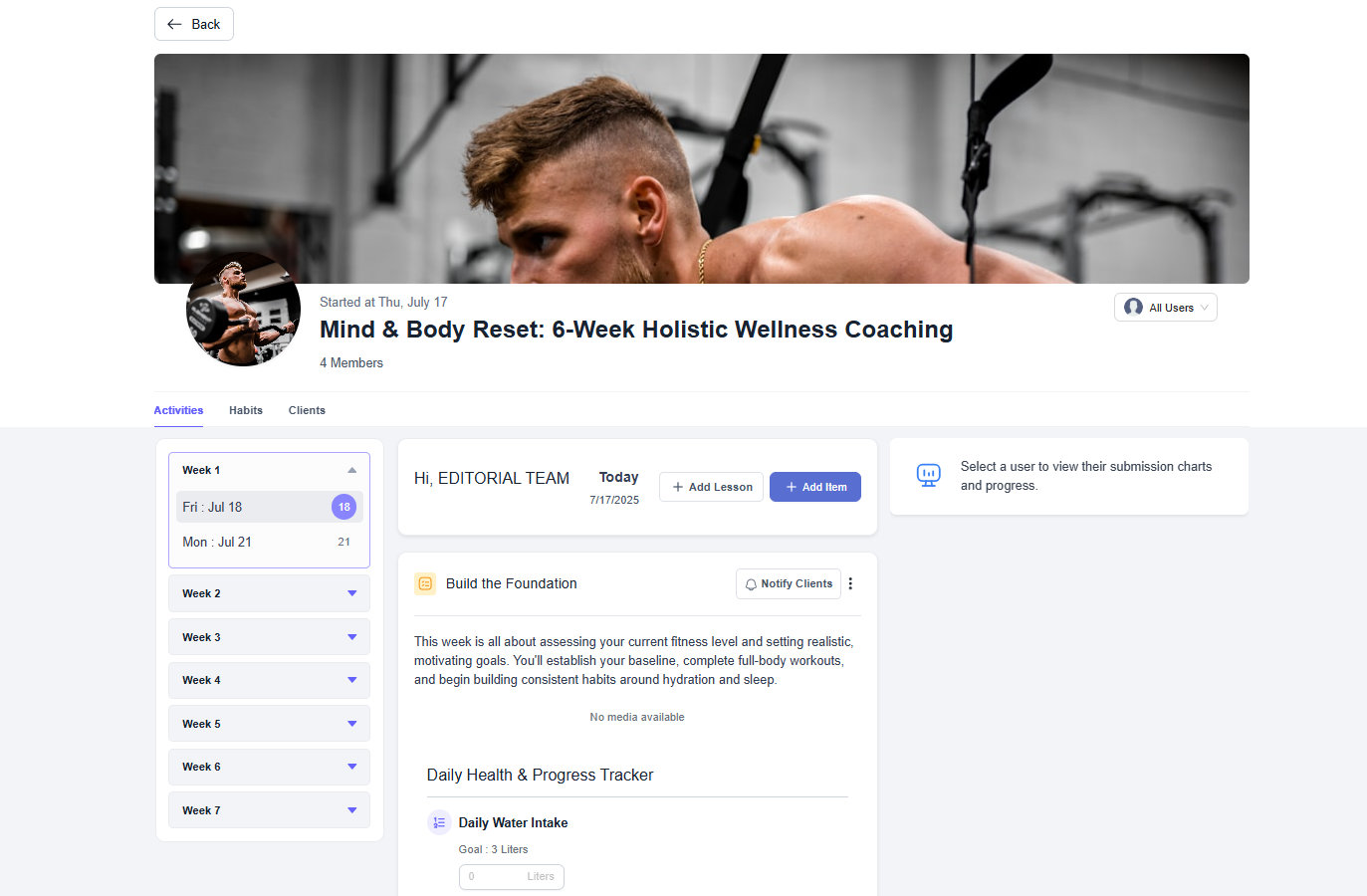
EzyCourse is the coaching platform built for coaches running actual one-to-one or group coaching programs.
You get create and sell courses, group coaching, 1:1 coaching, communities, live streaming, and email marketing in one dashboard.
Moreover, you will get white-label mobile apps included with the Unlimited tier ($179), which competitors usually gate behind $300+ plans or do not offer.
What makes it different for online group coaching specifically:
• Native live streaming; useful for paid masterclasses
• Built-in coaching community platform with chat, group threads, and notification controls
• Digital Rights Management (DRM) so program recordings can't be resued
• Sell unlimited courses, memberships, digital products, and coaching from the same checkout
• EzyCourser AI to create courses, email, content and AI-website builder
Pros
• Genuine all in one coaching platform: no need for separate course tool, community software, and email marketing
• White-label mobile apps included for free from the Unlimited plan, which is unusual at this price
• Strong content protection (DRM); most coaching platforms have none
• Scales from a solo coach to enterprise without forcing a migration
Cons
• Feature surface is wide; solo coaches running tiny programs may not need everything
• Some advanced add-ons (DRM, AI subtitles) are paid separately in lower plans
EzyCourse pricing

• Essential; $55/month: unlimited courses, 1 coaching program, 2 communities, 1 video library, 5 digital products, custom domain
• Pro; $129/month (most popular): white-label app, 5 communities, 50K marketing emails/month, free website migration
• Unlimited; $189/month: unlimited coaching programs, 100K emails, native live-streaming
• Elite; $279/month: Zoom Premium for 500 attendees, 500K emails, direct CEO access
• Enterprise; custom pricing for full data control, custom apps, and APIs
👉 Start your teaching journey now and run your next group coaching program in one platform.
2. Simply.Coach (Best for solo coaches focused on client management or L&D teams/universities)
Best for: Coaches who want to professionalize 1:1 and group sessions with strong client records, goals, and reports
Starting price: For solopreneurs (starts at $9/month)
Simply.Coach is built around the coach–client relationship. Every client has a record with notes, goals, session history, billing, and shared resources. It's SOC2, HIPAA, and GDPR compliant, which matters if you coach in healthcare, executive, or regulated B2B contexts.
This online coaching platform mainly focuses on delivering coach-friendly features. If you don't sell self-paced courses or run a community, this is exactly what you need.
Pros
• Centralized client records with goals, milestones, and progress tracking
• Automated session reminders and recurring scheduling
• Strong compliance posture (SOC2, HIPAA, GDPR)
• Built-in invoicing and payments
• Team collaboration for multi-coach practices
Cons
• No course builder; pair it with a separate platform if you sell courses
• Limited third-party integrations compared to all-in-ones
• Learning curve in the first week as you set up workflows
Simply.Coach pricing

Solopreneur: Ranges from $9/m to $69/m
Businesses: Custom
L&D Teams: Custom
Universities: Custom
3. EducateMe (Best for cohort-based digital academies)

Best for: Programs that look more like school cohorts than coaching practices; assignments, peer review, structured curricula
Starting price: $239/month (Pro)
EducateMe leans into the cohort-based course model. Live sessions, assignments managed Kanban-style, peer learning, and analytics for educator performance. The AI assistant guides learners based on their progress. Strong fit if your group coaching program runs on assignments and structured weekly content.
Pros
• Strong analytics across learners, assignments, and quizzes
• Kanban assignment view is genuinely useful for cohort facilitators
• Native Zoom integration; no app-switching mid-session
• Custom domain and branding on the Premium plan
Cons
• Pricing starts higher than most coaching tools ($239/month)
• Best fit for academies, not casual coaching groups
EducateMe pricing

• Pro; $239/month: 80 active users, unlimited storage, API, AI assistant
• Premium; $399/month: custom domain, free L&D sessions, priority support
• Scale; $399/month: 200 users, HRIS, custom automations
4. Teachfloor(Best for social and peer-driven group learning)

Best for: Coaches and educators whose programs depend on group discussion, peer review, and live cohort interaction
Starting price: $89/month
Teachfloor's selling point is social learning; making it one of the better platforms for facilitating group learning remotely. You can mix video lessons with live classes, peer review assignments, and an in-platform community. Cohorts that rely on participants teaching each other do well here.
Pros
• Engagement-focused course builder with peer review built in
• Zoom integration for live classes with Q&A
• Customizable branding even on lower tiers
• Reportedly higher completion rates due to community pressure
Cons
• Limited offline access
• Better for structured cohorts than open-ended coaching groups
Teachfloor pricing

Starts from $89/month: up to 50 active users, online academy, live classes, community
5. Seismic Learning (Best for sales coaching teams)

Best for: Sales orgs and corporate teams running structured onboarding and skill coaching at scale
Starting price: Contact sales
Seismic Learning (formerly Lessonly) sits at the corporate end of this list. It blends training, coaching, and performance measurement, and it's designed for sales productivity rather than independent coaches. If you coach reps and need a team coaching platform that ties training to revenue, it's purpose-built for that.
Pros
• Strong onboarding and continuous learning workflows
• Quizzes and assessments tied to retention metrics
• Blended learning supports classroom and online formats
• Performance analytics tied to sales outcomes
Cons
• Not for solo coaches; pricing and complexity assume an enterprise buyer
• Pricing not public; expect a sales cycle
• Heavy lift to set up content and learning paths
6. Google Meet (Best free video tool for small coaching groups)

Best for: Coaches running occasional group calls who don't need scheduling, payments, or a community in the same tool
Starting price: Free
Google Meet isn't really a group coaching platform; it's a video conferencing tool. But many coaches start here because it's free, reliable, and integrates with Google Calendar and Drive. For loose group calls or testing the waters before investing in a real platform, that's enough.
Pros
• High video and audio quality, no software install
• Free tier supports up to 100 participants for 60 minutes
• Integrates cleanly with Google Workspace
• Breakout rooms and live polls available on paid plans
Cons
• No client management, scheduling automation, or payments
• 60-minute limit on free tier breaks longer coaching sessions
• You'll need separate tools for everything else in your coaching business
Google Meet pricing

Free: 100 participants, 60-minute meetings
Enterprise: contact sales
7. Noomii (Best directory to find coaching clients)

Best for: New coaches who need leads and visibility, not delivery infrastructure
Starting price: Free for clients; $447/year for coaches to be listed
Worth a clarifying note: Noomii is a coach directory, not a group coaching platform. You list yourself, prospective clients find you, and you take the relationship elsewhere to deliver. Including it because it's relevant to coaches building a practice; but you'll still need delivery software.
Pros
• Sizable database of certified coaches and active clients
• Free initial consultations help convert leads
• Filters by specialty, region, and coaching style
• Reviews and ratings build trust for new coaches
Cons
• It's lead generation, not delivery; you still need another platform to coach
• Annual fee with no monthly option
• No in-app session, scheduling, or payment tools
Noomii pricing

8. Microsoft Teams (Best for coaches embedded in Microsoft 365 orgs)
Best for: Internal corporate coaches whose clients already live in Microsoft 365
Starting price: Microsoft 365 Personal starts at $99.99
Like Google Meet, Teams isn't a coaching platform; it's collaboration software. But if you're an internal coach at a Microsoft shop or running an online coaching platform for employees, your clients are already there, and the integration with Word, Excel, OneDrive, and Outlook removes friction. Several coaches use it as a manager coaching tool inside larger orgs.
Pros
• Tight integration with the rest of Microsoft 365
• Channels work well for organizing cohorts by topic
• Strong third-party integrations and security posture
• Real-time co-editing of documents during sessions
Cons
• No coaching-specific features; no goals, progress tracking, or program structure
• Steeper learning curve than purpose-built tools
• Requires Microsoft 365 subscription for most useful features
9. WebinarNinja (Best for marketing-led group sessions)

Best for: Coaches who run sales webinars and convert attendees into paid clients
Starting price: $0.60 per attendee/month (monthly)
|
WebinarNinja sits at the intersection of webinar platforms and group coaching tools. Live, automated, and hybrid webinar formats; built-in email sequences; landing pages; and attendee engagement tools. Better for the lead-gen side of a coaching business than for delivering ongoing programs.
Pros
• Multiple webinar types: live, automated, hybrid, series
• Engagement tools like polls, Q&A, and chat during sessions
• Automated email sequences for reminders and follow-ups
• Customizable landing and registration pages
Cons
• No client management, goals, or accountability features
• Pricing scales with attendees, which adds up fast
• Better as a top-of-funnel tool than as your main delivery platform
10. GoTo Meeting (Best for traditional business video conferencing)
Best for: Established consulting and coaching firms used to enterprise-grade meeting tools
Starting price: $14/month (Professional)
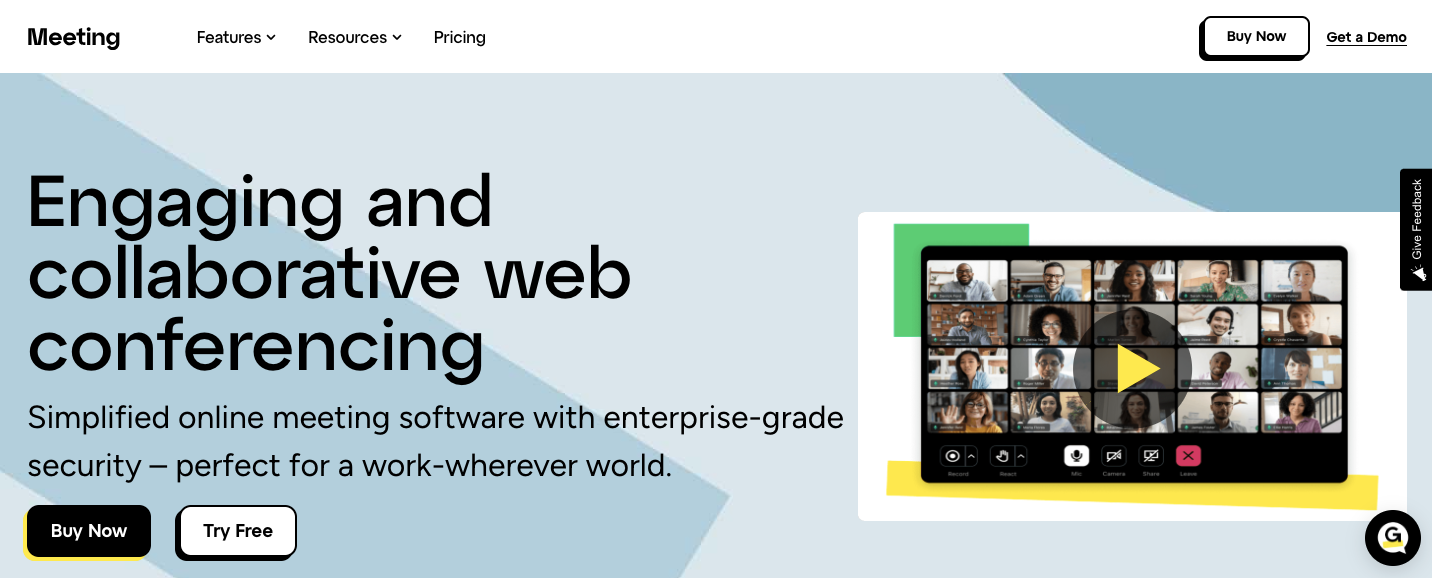
GoTo Meeting is the safe corporate choice and one of the more capable video coaching platforms for large group sessions: HD video, screen sharing, breakout rooms, cloud recording, AI meeting summaries, and tight calendar integrations. It does video conferencing well, but it's not built for cohort coaching specifically.
Pros
• Easy interface, predictable performance
• Breakout rooms work well for small group exercises
• Cloud recording with automatic transcripts
• Integrates with Google Calendar, Salesforce, and Outlook
Cons
• No coaching-specific features
• Limited free trial
• Performance can wobble in very large meetings
GoTo Meeting pricing

• Professional; $14/month: up to 150 participants, unlimited meetings, cloud recording
• Business; $19/month: up to 250 participants, breakout rooms, AI summaries
• Enterprise; custom pricing: webinars, room solutions, advanced integrations
11. CoachAccountable (Best for accountability-driven coaching)
Best for: Coaches whose programs depend on between-session homework, habits, and structured follow-through
Starting price: $20/month (Starter, 2 clients)
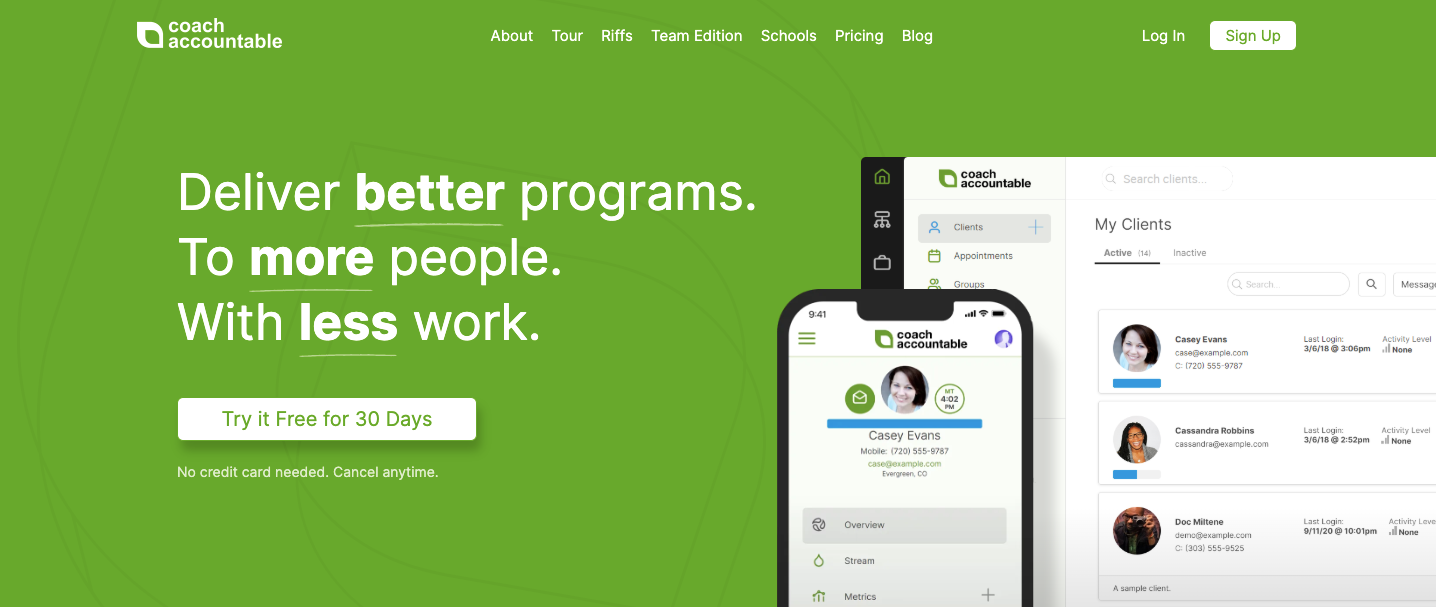
The name describes the product. CoachAccountable is built around making clients do the work between sessions: assignments, metrics tracking, automated reminders, and worksheets. Pricing scales by active client count, which keeps it cheap when you're starting and reasonable as you grow. Worth shortlisting if you've searched for CoachAccountable alternatives before; this is the original.
Pros
• Strong accountability and homework features
• Automated reminders for sessions, tasks, and deadlines
• Customizable templates for forms, notes, and follow-ups
• Pricing tiers map cleanly to practice size
Cons
• No course builder or community space
• Mobile experience is functional but not polished
• Pricing per active client adds up quickly past 50 clients
CoachAccountable pricing (per active clients)

• Starter; $20/month for 2 clients
• Level 1; $40/month for 5 clients
• Level 2; $70/month for 10 clients
• Level 3; $120/month for 20 clients; Level 4; $250/month for 50
• Level 5; $400/month for 100 clients; higher tiers available
12. Kajabi (Best for coaches who also sell content products)

Best for: Coaches running marketing-heavy businesses with courses, funnels, and email lists alongside coaching
Starting price: $143/month
Kajabi is a creator platform that added coaching features. You get courses, funnels, landing pages, email marketing, an affiliate program, and now group coaching workflows. If your business model is content-led; courses on the front end, coaching on the back end; Kajabi handles both.
Pros
• All-in-one platform for content, marketing, and group coaching services
• Strong sales funnel and email automation tools
• Built-in payments via PayPal and Stripe with 0% transaction fees
• Affiliate program out of the box
Cons
• Pricing is steep for solopreneurs not yet at scale
• Less flexible design than dedicated website builders
• No live chat support on lower-tier plans
Kajabi pricing

• Basic; $143/month: 5 products, 1 community
• Growth; $199/month: 50 products, 25K contacts
• Pro; $399/month: unlimited products, 100K contacts, 3 websites, mobile app
13. Upcoach (Best drag-and-drop program builder)
Best for: Coaches building structured programs with worksheets, modules, and step-by-step client journeys
Starting price: $29/month annual / $39/month monthly (Basic)
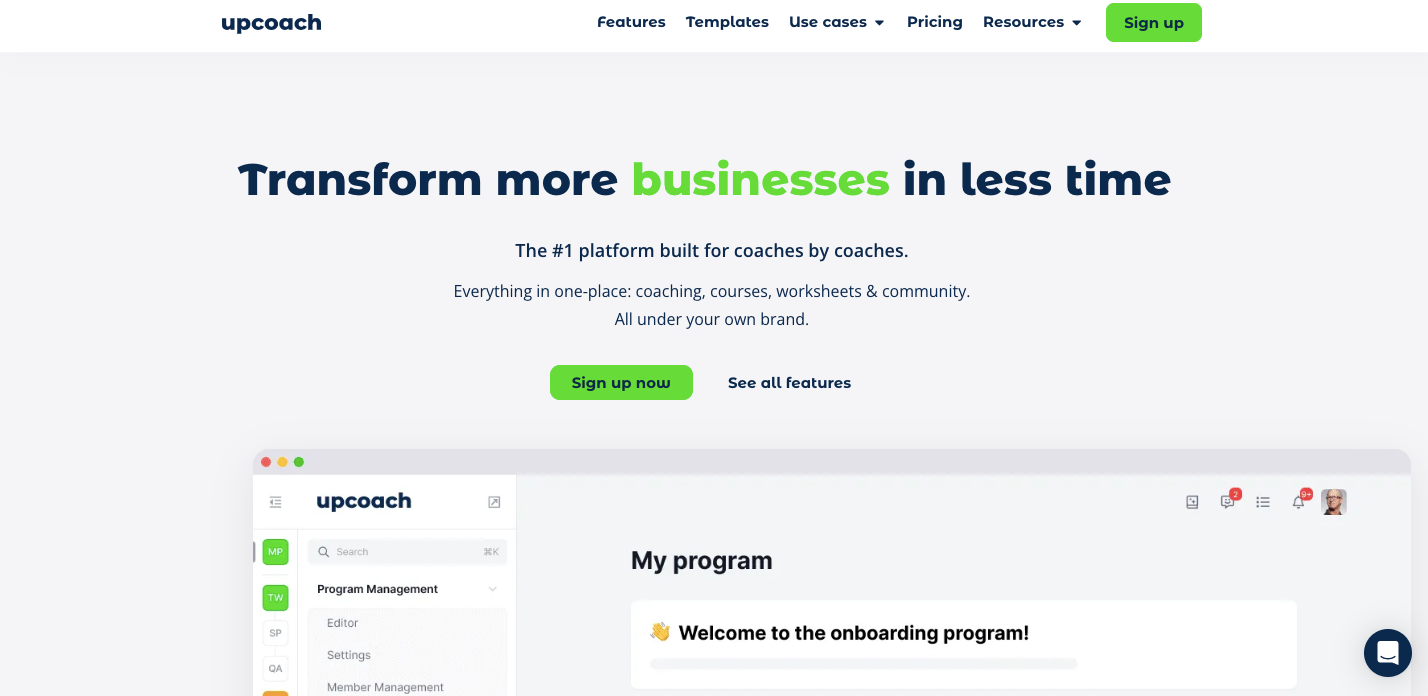
Upcoach lets you assemble coaching programs visually with a drag-and-drop builder, plug in courses, and track each client's progress through the journey. The Pro plan removes transaction fees and unlocks unlimited clients, which makes the math work better at scale for coaches running ongoing group coaching programs.
Pros
• Drag-and-drop builder for both programs and content
• Unlimited clients on the Pro plan
• Custom branding with your logo and colors
• 0% transaction fees on Pro (3.9% on Basic)
Cons
• Basic plan caps clients at 15 and charges 3.9% on transactions
• White-labeling not available on lower tiers
• Slower support response on Basic (48-hour SLA)
Upcoach pricing

Starter; $49/month annually: 15 clients, unlimited programs and courses, 4% transaction fee
Pro; $99/month annually: 100 clients, 2% transaction fees, priority support
Business+; $199/month annually: 250 clients, 1% transaction fees, priority support
14. CoachVantage (Best built-in video for solo coaches)
Best for: Solo coaches who want one tool for scheduling, video, contracts, and payments without bolting on Zoom
Starting price: $26/month (Clarity, billed annually)
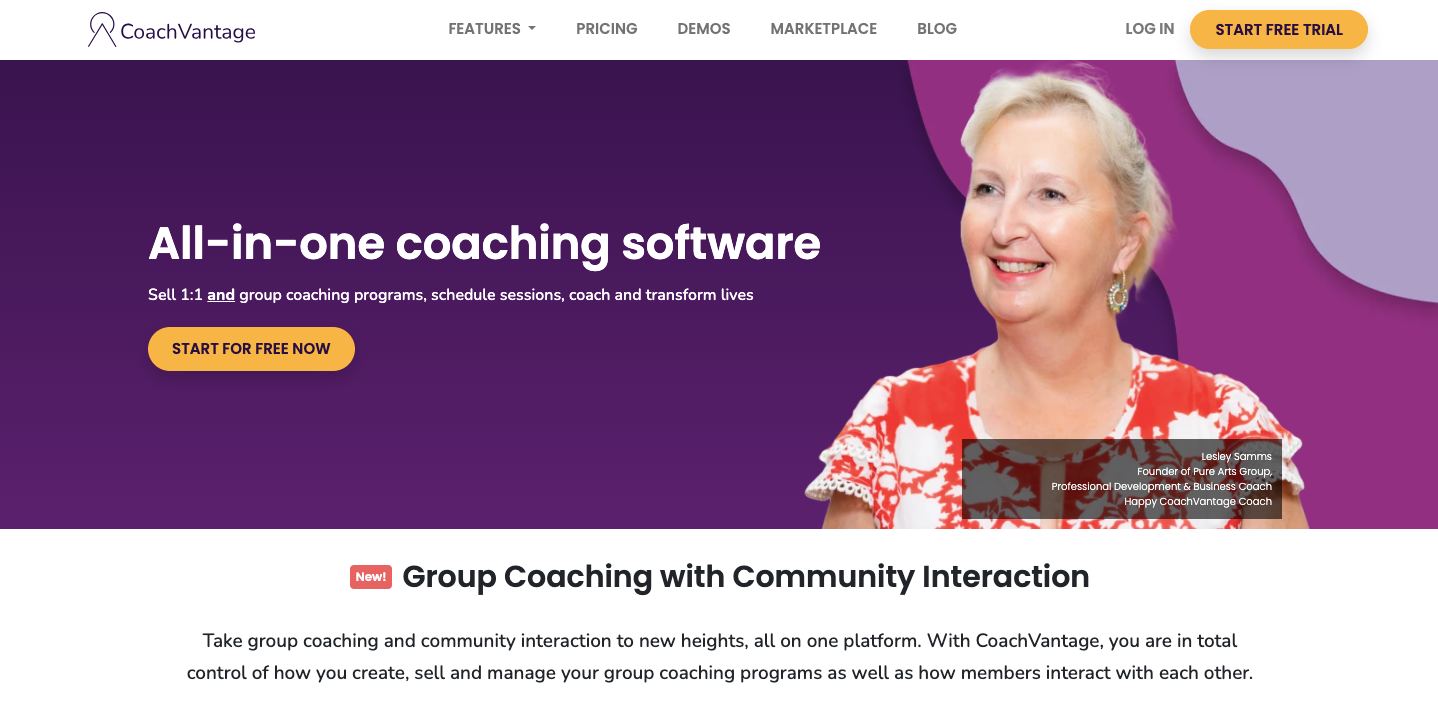
CoachVantage is CRM software for coaches with a native video tool, so you don't pay for Zoom on top. Add scheduling with calendar integrations, e-contracts, automated invoicing, and a client portal, and you have a tidy package for an independent coach who wants fewer subscriptions.
Pros
• Native CV Meet video tool included
• Unlimited coaching engagements without per-client fees
• Customizable client portal aligned to your brand
• Stripe and PayPal payment processing built in
• Coaching logs ready for ICF certification reporting
Cons
• Lower-tier plan limits video storage to 500MB
• E-contracts only on the higher Aha! plan
• Limited integrations outside standard CRM tools
CoachVantage pricing
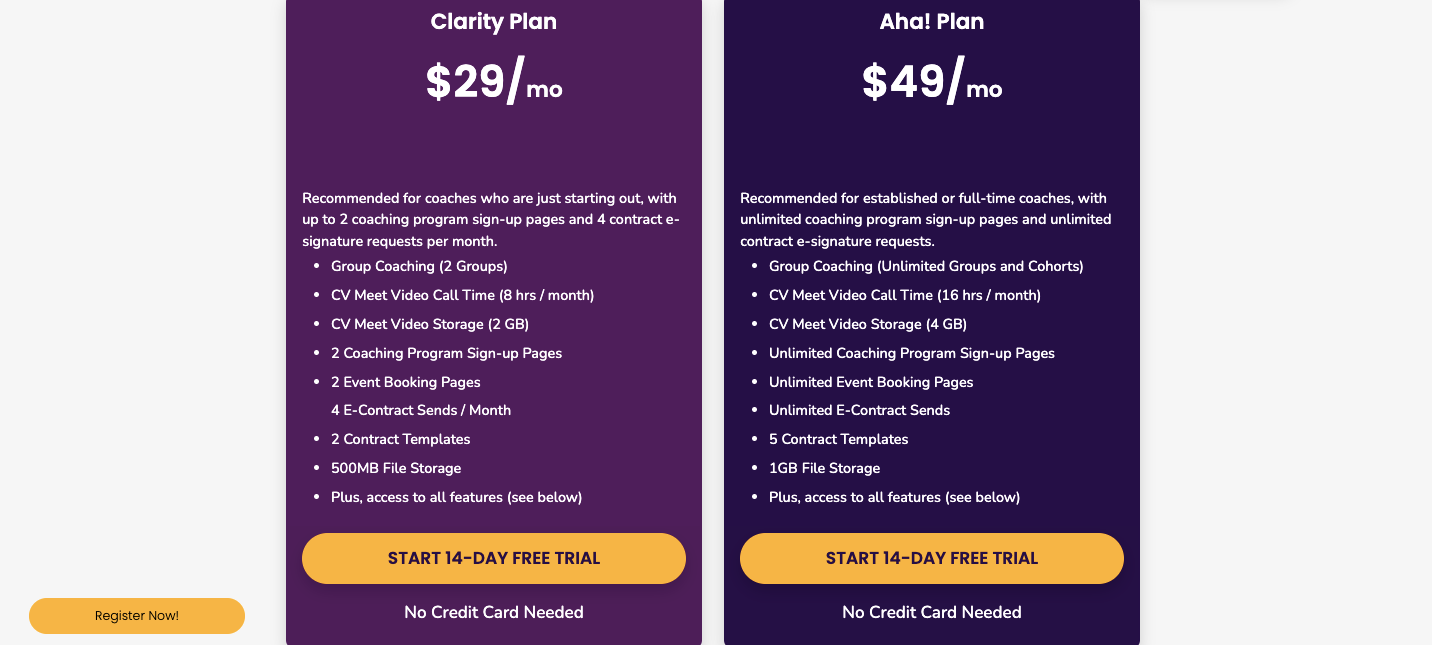
• Clarity; $29/month: 2 sign-up pages, 8 hours of CV Meet, 48 e-contract sends, 500MB storage
• Aha!; $49/month: unlimited sign-up pages and group sessions, 16 hours of CV Meet, unlimited e-contracts, 1GB storage
15. Paperbell (Best lightweight option for new coaches)

Best for: Independent coaches launching their first paid program who want simple over feature-heavy
Starting price: $57/month
Paperbell handles the boring-but-essential side of running a coaching practice: scheduling, contracts, payments, and client records, all in one clean interface. It doesn't try to be a course platform or a coaching community platform; and that focus is exactly the appeal for coaches who'd rather not configure a dashboard.
Pros
• Genuinely simple to set up; usable in an afternoon
• Combines scheduling, contracts, and payments in one flow
• Designed specifically for coaches, not retrofitted from another niche
• Single flat price regardless of client count
Cons
• No course builder or community space
• Light on group-specific features compared to cohort tools
• Less customization than higher-end platforms
How to choose a coaching platform that fits your business
After comparing fifteen tools, the choice usually comes down to five questions. Use them as a filter before signing up for any group coaching software:
1. What are you actually delivering? Live group calls only, structured cohorts, self-paced content plus coaching, or hybrid? Match the tool to the format.
2. How many clients do you have, realistically? Per-client pricing (CoachAccountable, Upcoach Basic) is cheap at low volume and expensive at scale. Flat pricing (EzyCourse, Paperbell, Kajabi) flips that.
3. Do you need a community? If your program runs on between-session discussion, prioritize platforms with native communities (EzyCourse, Kajabi, Teachfloor).
4. Do you sell content too? If yes, pick an all-in-one. If no, a focused practice tool will save you money.
5. Will you white-label a mobile app? Most platforms charge premium prices for this. EzyCourse offers it free, included with the Unlimited pricing tier.
How much does group coaching cost?
Group coaching is typically priced per session, per program, or via monthly membership. From the participant's side, expect:
Per session
Roughly $50 to $200 per person per session. This works for clients testing a coach before committing to a longer program.
Per program
Most online group coaching programs run $500 to $2,000 per participant for a fixed-length cohort, usually six to twelve weeks. This is the most common model for paid group coaching.
Monthly membership
Memberships run $100 to $500 per month for ongoing access to live sessions, recordings, and a community. Best for evergreen programs with continuous enrollment.
How does group coaching actually work?
In group coaching, a coach works with a small cohort; usually three to twelve people; sharing a goal or theme. Sessions are typically weekly or biweekly, 60 to 90 minutes, often with assignments between calls. Here's how a typical group coaching program runs:
Set group and individual goals at the start, so each session has a target.
Open each session with a short check-in: wins, struggles, blockers.
Move into the day's topic; usually a teach, then exercises or breakouts.
Run interactive work: roleplays, breakouts, or live problem-solving.
Hold accountability: who committed to what last week, what got done.
Close with assignments, reflections, and the date of the next session.
Done well, the cohort becomes the engine. Participants pull each other forward, and the coach facilitates rather than carries the entire room.
What makes a great online group coaching program?
Same fundamentals as good in-person coaching, just with the extra friction of being online. The groups that work tend to share a few traits:
• A capable facilitator who keeps the room focused without dominating it
• Clear, shared goals; vague programs produce vague outcomes
• Psychological safety, so participants share the real problems, not the polished version
• Active engagement structures; small group breakouts, not just one-to-many lectures
• Diversity of perspective inside the cohort
• Regular feedback loops between coach and participants
• Genuine accountability; check-ins, partnerships, or commitments tracked between sessions
So, which is the best group coaching platform for you?
If you run actual programs and want courses, group calls, communities, payments, and email in one platform, EzyCourse is the most complete pick on this list of best group coaching platforms. The Pro plan ($19/month) includes white-label mobile apps, Zoom Premium, and 50,000 marketing emails; features that other platforms gate behind $300+ tiers.
If you only manage 1:1 and group sessions and don't sell content, Simply.Coach or CoachAccountable will do more of what you actually need for less money.
If your business is marketing-led; funnels, courses, an email list; Kajabi or Upcoach makes sense, with the trade-off of higher pricing.
👉 Start your teaching journey now; try EzyCourse free and see if it fits how you coach.
Frequently asked questions
What are the best group coaching platforms in 2026?
EzyCourse is the strongest all-in-one among the best group coaching platforms because it bundles courses, communities, live streaming, and payments in one tool. Simply.Coach and CoachAccountable are better picks if you only need client management, goals, and scheduling without selling content. Kajabi suits marketing-led coaches selling courses too.
How much does a group coaching platform cost?
Most group coaching platforms range from $20 to $300 per month, depending on features and client count. Lightweight tools like CoachAccountable start around $20/month, while all-in-one platforms like EzyCourse and Kajabi sit between $55 and $300/month based on the tier and team size.
What is the best free group coaching app?
There's no fully free group coaching app with serious features, but Google Meet's free tier handles up to 100 participants for 60 minutes per call. Most paid platforms (EzyCourse, Kajabi, Teachfloor) offer 14-day free trials so you can test the full feature set before paying.
Are there coaching platforms that support team-wide collaboration?
Yes. Microsoft Teams and Seismic Learning are built for team coaching across an organization. EzyCourse and Kajabi support multi-instructor accounts, so you can run virtual group coaching programs with several coaches accessing the same dashboard. For internal corporate coaching, Teams plus a structured program tool works well.
Which video coaching platform is ideal for handling large group sessions?
EzyCourse handles up to 40,000 attendees on its live streaming feature, making it the strongest pick for large group sessions. GoTo Meeting Business supports 250 participants, and Google Meet Business Plus supports 250. For paid masterclasses or summits, EzyCourse's live streaming capacity is unmatched at this price tier.
Can I run group coaching on Zoom alone?
You can run the calls, but Zoom doesn't handle scheduling automation, payments, client records, accountability tools, or community spaces. Most coaches start on Zoom and then move to a dedicated group coaching platform once admin work eats more time than coaching.
How do I choose a coaching platform for my business?
Start with format; what are you actually delivering? Then check pricing structure (per-client vs flat), community needs, content sales, and white-label requirements. Match those answers to a platform from this list. Solo coaches without content needs should pick lean tools; coaches selling programs need an all-in-one.
Is group coaching more profitable than 1-on-1 coaching?
Per hour, yes. A group coach charging $200 per participant for ten clients earns $2,000 from a 90-minute session; roughly 4 to 5 times more than the same hour spent in 1:1 coaching at typical rates. The trade-off is more upfront work designing the group coaching program.
Do I need a separate platform for community and coaching?
Not anymore. All-in-one group coaching platforms like EzyCourse and Kajabi include native communities, so members can access discussion threads, group chat, and live sessions without bouncing between tools. If you already pay for Slack or Circle, that's fine, but consolidating usually saves money and friction.