
Many course creators think that only creating great content brings success. In reality, this is one piece of a full cake. One of the essential elements to flourish in the course-selling business is knowing how to protect online course from piracy and implement the ideas.
To provide solutions for the issue, we created a complete guide that includes 9 proven ways to protect your online course so you can focus on implementing ideas and get peace of mind when selling online courses.
Let's dive in.
Growing Problem of Digital Piracy
Course creators are right to be worried about digital theft, and the numbers show that their fears are real. MUSO's piracy data shows that in the first quarter of 2022, about 5.7 billion people in the US went to piracy websites. That's about 10.9% of all piracy traffic around the world.
It is even more shocking that publishing piracy grew by 58.5% from the first quarter of 2021 to the first quarter of 2022. This was the biggest rise in all types of piracy. This isn't just a number; it means that creators who put their hearts and money into their work lost billions of dollars.
Piracy Rates by Industry
Industry | Growth Rate (YoY) | Main Causes |
Education and Publishing | 58.5% | High prices for courses |
Software and SaaS | 9.6% | People often look for cracked software to avoid expensive subscriptions or licenses. |
Movies and TV | 19.2% | Early leaks of highly anticipated content and uneven streaming access drive users to piracy. |
To stop piracy, the first thing you need to do is figure out why it happens. When your course is just a bunch of videos, it becomes a product that is easy to copy and share. But if you switch from selling "information" to selling "transformation" and "access," any pirated copy becomes useless. A pirate can take your MP4 files, but they can't take your presence, your feedback, or the network of students you've built.
9 Proven Ways To Keep Your Online Course Content Safe from Piracy
1. Use strong technical protections
Technical protections are like the locks on your computer. They keep casual thieves out and make it much harder for anyone who really wants to steal your work.
#Video Hosting with DRM Security

Hosting your videos on sites that use Digital Rights Management (DRM) is one of the best ways to keep them safe. VdoCipher and BunnyStream are two services that do more than just store your videos. They also encrypt them using advanced methods like AES-128 or Widevine.
How it works:
Secure Request: The video player asks a secure server for a special "key" to unlock the content every time a student hits play.
Protected Stream: The video is never shown in a way that makes it easy to copy.
Files that are useless: Even if someone does manage to download the file, it's just a messy collection of information that won't work without the secure key.
Most DRM platforms also have extra features, like Geo-blocking (which stops people from accessing your content from certain countries) and Domain restrictions (which make sure your videos only play on your website).
EzyCourse can be a great choice because it has a strong DRM system built in that goes even further by stopping people from taking screenshots, recording screens, and downloading videos directly. You can check out the DRM solution and how it fits right into your course material.
👉Protect Your Online Courses with DRM!
#Dynamic Watermarking

Dynamic watermarking is a great way to scare people off. It puts information like the student's email address, IP address, or user ID right on top of the video.
Why it works so well:
The watermark isn't fixed; it moves and fades in and out, which makes it very hard to crop or blur.
A lot of people won't want their personal email address to be seen on a pirated copy.
You can find out who leaked something, block them, and then use the proof to send them a DMCA notice if it happens.
#Monitoring IPs and devices

Sharing accounts is a common way for people to "soft-pirate" content. You can stop this by:
Limiting the number of logins at the same time (for example, only two devices at a time).
Only letting people use devices that have been approved ahead of time.
Noticing strange behavior, like an account logging in from three different countries in one day.
2. Create Your Course Beyond Just Videos
If you want to really stop piracy, you need to know why people look for pirated content. Your course may appear to consist solely of recorded videos that are easily replicable. But everything changes when you sell "transformation."
To sell "transformation," you need to add a personal, interactive element in your course. For example, you can answer messages or emails from your students and include questions and answer sessions in your courses. If you do so, your pirated copy will feel empty and will not impact your course-selling business much.
3. Close all technical gaps and keep all types of content safe
Your course has more than just videos; it also has PDFs, workbooks, and guides. Pirates are always on the lookout for weak spots, so you need to protect everything.
#PDFs with Encryption

Don't leave your written work out in the open. LockLizard and Vitrium are two tools that can help keep your PDFs safe by:
Decide who can copy or print your content.
Make files expire after a certain date.
Only allow access to devices that have been approved.
#Fingerprint Browsers

This method makes a unique digital "fingerprint" for each user by combining different device features, such as the browser type, the screen resolution, and the plugins. It can tell if the same account is accessed from different places, even with a VPN.
#Blocks for recording the screen

Anyone could always point a phone at their screen, but most modern video players can find and stop popular screen recording programs like OBS Studio or Camtasia. Adding layers is the key; each extra step makes it harder for someone to steal your course.
4. Pick a secure, all-in-one course platform
It is very important to choose the right Learning Management System (LMS). A lot of creators start with WordPress and then add a "Frankenstein" mix of plugins for things like forums, videos, and memberships. It seems like it can do a lot, but every extra plugin could be a security risk.
Instead, you can pick an all-in-one platform like EzyCourse because this gives you a much safer base. Your content isn't on a public server; it's behind secure authentication so that only people who have permission can see it. You also get:
Regular updates to security and SSL encryption for the whole site.
A support team that is always on the lookout for weaknesses.
Built-in community features make your course feel like more than just a bunch of files.
👉 Start with the Best All-In-One Course Platform!
5. Use strategic content delivery
The way you deliver your content is a strong security tool on its own.
#Feed Your Content Slowly

Instead of giving everyone access to everything at once, let them access your lessons over time. Open one module each week for a 12-week course. This stops students from getting too stressed out and stops pirates from downloading your whole course in one go.
#Keep Your Refund Window Safe
Think about only letting people access the first few modules during the refund period. This stops the "download and refund" trick, in which people take all of your content and then ask for their money back right away.
6. Take strong legal and administrative action
You sometimes need the power of the law to back you up.
#Prepare Your Legal Defense

Registering your trademarks and copyrights is a formal way to protect your intellectual property. You can use the USPTO's TESS system in the United States. If you ever need to defend your work, keep detailed records of your drafts and original files. You can also find more information about how to protect your copyright online.
#Sending DMCA Takedown Notices
The DMCA (Digital Millennium Copyright Act) is your best friend if you find your stuff on a site that doesn't have permission to use it. You can send a message to the owner of the website, the hosting company, or the search engine to ask them to take down the content.
Most big sites, like YouTube and Google, have easy-to-use forms to make this process quick and easy.
#Terms of Service (ToS) that are clear
Before letting any student in, make sure they all agree to your terms of service. Make it clear: you can't share, copy, or sell. A well-written ToS isn't just a formality; it's proof you can use in court if you ever need to.
7. Build a community that pirates can't take over
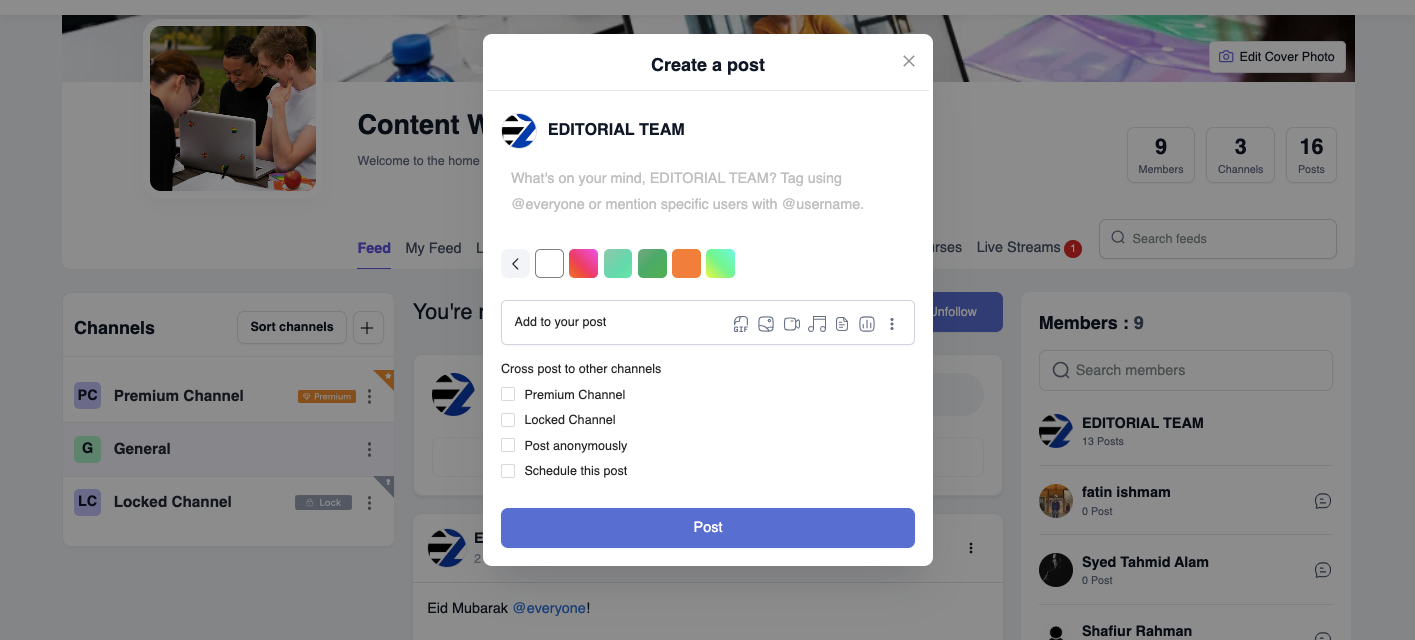
This might be the best way to make piracy useless. Pirates can copy your videos, but they can't copy the relationships, the interactions in real time, or the sense of belonging that comes with being part of a community.
#The "Level Up" Strategy and Gamification
Make learning fun and piracy less fun by giving out levels and rewards. For instance:
Level 1: Everyone can get in.
Level 2: A student must introduce themselves and take part in a discussion to unlock it.
Higher Levels: Access to private group chats or advanced lessons.
Pirates only learn the basics; your real students get the whole, ever-changing experience.
👉 Build Interactive Community with EzyCourse!
#Live Events and Networking
You can't steal weekly Q&A calls, live coaching, or networking events. Being there in person, asking questions, and getting direct help is always better than listening to a recording of a live session.
8. Use automated tools to stop piracy
You don't have to look for pirates by hand. Automated tools like Red Points and DMCA.com can look for illegal copies of your content on the web, file-sharing sites, and social media. They can even send out takedown notices for you.
You can also use browser-based tools that stop people from right-clicking or selecting text. They won't stop a pro, but they will stop casual copying and make it clear that your content is safe.
9. Make a business model that can't be copied.
As online learning changes, the most successful creators will be those whose business models can't be affected by piracy. This means providing services that can't be copied:

Personal coaching: time spent with you one-on-one.
Live Workshops: Get feedback in real time and interactively.
Individualized Evaluations: Looking at a student's specific work.
This is where EzyCourse really stands out. It gives you the tools to run a business with live sessions, tiered access, and mentorship integrations run within the community. It makes your course a high-end service that a pirated file can never replace.
👉 Start Your Coaching Business!
How to Protect Online Courses from Piracy: Quick Action
Way | Hardness | Effectiveness | Price | Best For |
DRM Video Hosting | Medium | High | $30 to $200 per month | Video courses that cost a lot |
Drip Feeding | Easy | Medium | Free to $30 a month | Stopping downloads in bulk |
Focus on the Community | Hard | Very High | $50 to $300 per month | Creating value over time |
Dynamic Watermarking | Medium | High | $20–$100 per month | Psychological deterrent |
DMCA (Law) | Easy | Medium | Free to $199 a month | Getting rid of leaks that aren't allowed |
Conclusion
By now, you have learned several effective ways to protect your online course content from piracy. The next step is to apply these strategies so you can truly benefit from everything discussed in the article. Before wrapping up, let’s briefly revisit the key ideas.
Protecting your online course requires proactive action and a combination of smart approaches. By using tools such as DRM protection, watermarking, secure content delivery, and establishing a strong legal framework, you can significantly reduce the chances of pirates profiting from your hard work.
However, technology alone is not the ultimate solution. One of the strongest defenses against piracy is building an active and engaged community. Your expertise, interaction, and presence provide value that cannot be copied or stolen. When students feel connected, supported, and involved, they become part of the environment you have created.
If you want your online course business to thrive in the long run, focus on building relationships with your students and create a space where they feel truly invested.
Ready to safeguard your content while growing a loyal learning community? With EzyCourse, you can stop worrying about piracy and concentrate on what truly matters.
👉 Get Started with EzyCourse for a 14-day FREE Trial!
FAQs
1. Is it really possible to stop piracy for good?
No. People can find a way if they really want to, like filming their screen with a phone. But if you use the methods above, it will be so hard and time-consuming that 99% of people won't bother.
2. Will DRM and other technical protections bother my students?
Not if you choose a good platform. Modern DRM works very well and usually doesn't change how the student watches. It works in the background to protect your files.
3. What should I do first if I find out that someone has stolen my course?
Don't freak out. First, write down the proof (take screenshots and save the URL). Thereafter, send a DMCA takedown notice to the site that hosts the content or use Google's removal tool.
4. Is it worth it to pay for a professional monitoring service?
It depends on how much money you make. If your course is a big part of your income, a service that automatically finds and deletes pirated copies can save you hundreds of hours of work and thousands of dollars in lost sales.
5. Is there a way to protect my course even if I don't have a lot of money?
Of course. Use a safe platform, turn on drip feeding, and work on building a strong community as your first steps. These work very well and don't cost much.


