
To launch your own newsletter or get visitors via email, a platform is needed. In that case, you can get confused about many options as all claim to be the best in the quote. But how would you know without trying them?
Thinking of that, we have spent tons of hours gathering the 11 best newsletter platforms for small business to create email newsletters. Platforms like EzyCourse work fine for newsletter sends, others offer free plans or more options. Other than this, Behiive and Substack can help you shorten the email marketing tasks with ideal tools.
To help you decide easily, we’ll break each one down with a detailed review in a practical form so you can make the right choice. Let’s get into it!
What Are Newsletter Platforms?
A newsletter is the daily emails that a creator or business owner sends to their group member. These emails can also include news, stories, tips, product updates, deals, or personal ideas. In fact, it helps members reach out to your brand or take advantage of your deals.
And, a newsletter platform is the tool that makes all of this possible. It also helps you collect email addresses, design campaigns, and send newsletters to your subscribers with no stress. In simple words, it is a system that works behind the scenes to manage your emails.

Plus, this platform is used to send emails in automation. It also helps you stay organized, follow email rules, and track how many people open or read your emails. Most of the time, writers, creators, brands, bloggers, tutors, and beginners use this kind of platform.
So, if you want a reliable way to talk to your member directly, a newsletter platform makes that easy and safe.
What Are the Elements of a Newsletter?

A newsletter has a clear purpose, which is to discuss useful, limited, or exciting deals in a simple way. To do this well, here are a few key elements of it:
Header: This is the first thing readers see. It also shows your style and encourages them to continue reading.
Logo: It is a logo that helps readers to recognize who the email is from and builds trust over time.
Images: This is the visual aspect that makes the newsletter look appealing and easier to enjoy.
Content layout: It is an outline with headings, sections, size, and so on to help readers scan the message quickly.
Personalization: This is the part to customize small details, like using the reader’s name to make the newsletter feel branded.
Why Do You Need Platforms for Newsletters?
Newsletter platforms give you a direct and dependable way to connect with your clients. Plus, it helps you stay at the top of your client’s mind to impact buying decisions. Plus, this helps you to remind your group of your brand and stay visible subconsciously through emails.
Let’s find out a few reasons why you need a platform for a newsletter:
To communicate directly with members or clients.
To get and manage email subscribers easily.
To send emails to your group at once.
To make clean and professional emails.
To track and reach out to the visitors who signed up.
To market new deals, limited offers, and so on.
Factors to Consider for the Best Platforms for Newsletters
Selecting the ideal email or newsletter platforms is not a hard task if you are clear on what you want. And to get it, you’ll first need to ask yourself a few questions. Like:

What is my budget?
Do I prefer a basic platform or an all-in-one one?
Which traits are a must for me?
After you set your mind and know the answers, it’s time to go to the next step. In that, you’ll need to focus on the internal aspects. For instance, you’ll need to think of the convenient aspects of the platform that match your needs. These are:
Ease of writing with tools and builders.
Pre-made templates to customize the content.
Count of email sends, subscribers, and so on.
Paid newsletter options with subscriptions.
In-built analytics and dashboard to track insights.
Simple to migrate or switch.
Now that you know the points to look at to pick the right newsletter platform, it’s time to know how to test it out.
How To Test Email Newsletter Platforms?
To test one of the digital newsletter platforms properly, you should treat it like a real working tool. Well, you just need to check its usage, setup, delivery, and so on. Here’s how you can test it:
Step 1: Set Up Account & Onboard
Make an account and look into the onboarding flow of the platform to know if it’s easy to navigate. It’s also ideal to check the clarity and UI of the platform.
For instance, you should check if it’s simple to make your first email list or campaign. Plus, ensure to add/import contacts manually and see how smooth the process feels. If you can send a test email quickly without any help, this is a good sign.
Step 2: Test the Email Editors and Tools
It’s better to make a newsletter from scratch using its editor and tools. Then, it’s right to use the drag-and-drop editor to add text, images, buttons, and dividers.
You can also adjust spacing and fonts. With that, it’s better to preview the email on mobile and desktop. If HTML editing is available, you’ll need to test it out to see the customization capability.
Step 3: Make Basic Automation Workflows
You’ll need to set up simple automation, like a welcome email or follow-up message, to check if it works. Besides, you can subscribe using a test email address and confirm the automation triggers at the right time. Plus, it’s better to give updates on subscriber activity correctly.
Step 4: Check Deliverability Across Inboxes
Provide test emails to Gmail, Outlook, Yahoo, and other accounts. With that, you can observe if the messages land in the inbox, promotions, or spam.
Step 5: Review Analytics and Pricing Clarity
Finally, review reports after sending them to check if it works fast or not. Plus, you should understand opens, clicks, and subscriber behavior easily. If not, it’s better to avoid the platform and go for another. You can also check if pricing limits and extra costs are clearly explained.
11 Best Newsletter Platforms That You Will Need as a Creator
To make profits with newsletters or emails, it is essential to select the right platform. But that’s the hard task that you’ll need to choose by focusing on the real plus points. So, how will you do that? Well, you can do it by trying it in real time.
However, it’s not possible to try all the platforms due to diverse price rates and options that make it tough to decide. To help you out, we’ll share the top newsletter platforms that have loads of good options with benefits that you can compare. Here’s the list:
1. EzyCourse
2. Beehiiv
3. Substack
4. MailerLite
5. Kit
6. EmailOctopus
7. Flodesk
8. GetResponse
9. Mailchimp
10. Ghost
11. AWeber
Without wasting any time, let’s get into the details to show our 11 picks below:
1. EzyCourse

EzyCourse is an all-in-one online platform to create courses, run coaching, monetize with memberships, and send email newsletters. You can use the platform as a newsletter platform to market your brand, product, or service to your audience. Well, it has its own built-in email marketing features, email campaigns, pre-built templates, email automation & sequence, email statistics, and so on.
With the automation and marketing system to help you schedule your emails and send them to your picked members on time.
Plus, it has a clean and simple dashboard to navigate or work with your content. With its form builder, you can easily allow your members to join or get reminded of your special deals. And above that, it lets you make landing pages, homepages, or a whole site with its site builder.
As a creator, you can make email campaigns and track results with no need for third-party email tools. Plus, you can send more than 10,000 emails per month with a limitless storage option.
This platform also comes with 250+ pre-made website templates to easily pick a design for your site and edit it in your own way. Moreover, you will get a plethora of email templates as well. While you are looking to create stunning newsletters, these pre-built templates will help you quickly design a newsletter.
Thinking about custom design? We’ve got some good news for you. You can change the outline, text, image, colors, and so on to make a newsletter in an eye-catching way. In addition to that, it offers you email tags to help you organize subscribers and send more targeted messages. Then again, this platform lets you sell digital & physical products, courses, lessons, and memberships in one place.
Besides, it offers you community tools like chats, events, a blog, and appointment booking to connect with your members.
Not to mention that it offers extra benefits if you want to make courses with quizzes, SCORM tools, and gamification. Plus, this platform gives multilingual support to make content in different languages.
It also lets you offer other options like smart upsells, coupons, and tiered pricing to help you ensure higher sales. Plus, you can be creative by using the affiliate plan to allow your members to promote your newsletters.
Furthermore, it comes with webhooks to connect with email tools if needed. Plus, you can make use of AI to get ideas, an outline, or simply craft unique content. In general, EzyCourse is a great deal for creators who want to craft, market, sell, and impact in the business field.
Top Features

Email Marketing Tools: This platform lets you make targeted email campaigns directly from the dashboard. Plus, it gives the option to engage subscribers easily and manage newsletters without relying on third-party tools or integrations.
Email Automation & Orders: It automates welcome emails, nurturing flows, course updates, and sales sequences to build relationships. Plus, it lets you quicken the task on posting emails or updating on special deals on time.
Email Performance Analytics: You can track open rates, clicks, reach, and delivery insights with its detailed email statistics. This also helps you get data on your member's behavior to use proper newsletter campaigns for better results.
Monetization Flexibility: This platform offers you diverse ways to monetize your users with courses, lessons, products, memberships, subscriptions, blogs, and content libraries. Plus, you can sell an event or book it for a special group.
Advanced Selling Options: It lets you increase revenue with smart upsells, tiered pricing, coupons, magic checkout, and multi-currency pricing. Plus, this platform has an affiliate plan to market your newsletter or brand indirectly.
Integration Benefit: You can easily connect your newsletter with webhooks to directly send the ready-made file from other platforms. Plus, it gives you all the tools to integrate based on your work type with a special AI assistant.
Course & Learning Experience: Apart from the email aspect, it lets you make full-fledged courses, quizzes, SCORM content, gamified lessons, and sites. This platform also offers a branded mobile app option that works on Android and iOS devices.
Community & Engagement Tools: It allows you to build active communities with chats, events, calendars, blogs, pop-ups, and so on. Thanks to this, you can connect with your members to make the group connection strong that lasts long.
Pricing Plan

Essential Plan: $55/month with 10k marketing emails and limitless custom pages.
Pro Plan: $129/month with 50k marketing emails, affiliate plans, and paid blogs.
Unlimited Plan: $189/month with 100k marketing emails and limitless memberships.
Elite Plan: $279/month with 500k marketing emails and $0.005 per extra email.

Enterprise Plan: $499/month with advanced, customizable features.
Note: The pricing given above can change based on a special deal or a discount range.
Pros
True all-in-one platform
Email newsletter creation made easy
Powerful built-in email marketing tools
Offers 500,000 monthly marketing emails.
Covers a wide range of features like courses, coaching, communities, and memberships
Connect with 1,500+ tools with its webhook option.
Allow you to make smart flows with tasks and goals with its automation.
Get proper insight into your client activities with its analytics.
Includes white label options, email stats, forms, and contacts options.
Sell online items, membership sites, emails, subscriptions, and so on.
Cons
Contains no free plan but a 30-day trial only.
Also Read Here: 10 Best Email Marketing Tips & Strategies for Course Creators
👉See email automation in action🔥
2. Beehiiv
Beehiiv is a modern newsletter platform that works great for creators who want to grow fast and monetize efficiently. Unlike any other platforms, it focuses heavily on newsletter-first growth strategies. This also makes it a strong choice for writers, media founders, and creators.
With this, you can get amazing monetization options to earn passive income. In fact, it offers paid subscriptions, direct sponsorships, and integrated ad networks. Plus, this platform offers sponsored referrals to earn by promoting other creators.
It also stands out for its advanced analytics. Thanks to this, you can get detailed insights into subscriber behavior, open rates, click tracking, and growth trends.

From a creation POV, it offers a skilled newsletter editor with strong customization options. You can also design content that matches your brand identity with rare layouts, templates, and dynamic content.
Besides, this platform offers you its built-in Beehiiv AI options to speed up the tasks and make content well. It also lets you make a site design, draft, refine, and so on. Plus, this option lets you decode languages and generate images to support the newsletter.
Beyond newsletters, it allows you to host podcasts and work with team members. This platform also lets you build a community by linking podcasts, blogs, and email lists.

Moreover, you get a chance to sell your digital items like courses, products, and services. In that case, the platform doesn’t take any commission on each sale you get. Plus, you get tons of payment options to receive revenue with no hassle.
Additionally, it offers survey and subscription forms to send an ideal newsletter based on subscribers. You can also earn income by suggesting newsletters and getting paid per signup. Well, it’s best for creators who scale, monetize, and build a media brand.
Top Features
Get Strong Monetization Tools: This platform supports paid subscriptions, ads, boosts, and sponsorships. It also gives you a chance to earn directly.
Monitor Newsletter with Analytics: It lets you track insights of your clients to improve newsletters and get brand growth.
Market with Referral Program: You can add referral plans to let your subscribers earn royalties by sharing your content with new visitors.
Use AI to Design Content & Site: This platform uses AI to create content ideas, improve newsletters, and site outlines.
Automate & Integrate with Tools: It lets you automate tasks in emails with the API options. Plus, it lets you interact with 1000+ online tools to connect with.
Pricing Plan

Launch Plan: $0/month with custom site & newsletters and limitless email sends.
Scale Plan: $43/month with digital items, beehiiv AI, automation, and 3 seats.
Max Plan: $96/month with podcast websites, audio newsletters, and limitless seats.
Enterprise Plan: Personalized pricing plan with 100K+ subscribers limits.
Pros
Contain great editor and builder options to make an email well.
Editing the email ads seems easy with customization options.
Hosting a site to keep newsletters is a plus point.
Simple to make a premium newsletter for only paid subscribers.
Cons
No monetization options on the free plan.
The templates look pretty bland.
👉Create email newsletters now!🔥
3. Substack
Substack is one of the best newsletter platforms for writers, journalists, and independent creators. Plus, it’s made to make writing and publishing as simple as possible. With this, you can post newsletters and make it easier for your members to comment as well.
To begin with, this platform is pretty simple to set up for a beginner. In that case, you can start a newsletter, publish posts, and grow subscribers without paying anything upfront. And, if you choose to monetize, it offers you all the options to make that happen.
Besides, you’ll find built-in payment processing options for paid subscriptions. This also makes it simpler to start earning and handle the pay in a relatable gateway.

Along with that, it comes with a community-building interface. This platform also lets your members join in discussions and join chats. It also makes a strong sense of connection between writers and their audience.
Plus, this platform has built-in discovery features that let you find newsletters directly. It can also help new writers gain visibility. However, you’ll need to pay 10% of your paid subscriptions as commission on each gain.
For creators with a large audience, this platform can seem expensive compared to its alternatives like EzyCourse or Beehiiv. Plus, it has limited customization options.

Furthermore, this platform comes with an email editor that makes it easier for you to do proper designs with its tools. Besides, you can add sounds, files, images, videos, and quotes to make the newsletter look professional.
On top of that, it gives you an automation option to schedule emails or content at a specific time. This platform also lets you have your own site with a subscription form. Plus, you can get referral plans to generate income separately.
Top Features
Simple Writing Experience: It offers a strong editor tool that lets writers focus entirely on publishing content without distractions.
Built-in Paid Subscriptions: This platform can easily offer premium content and accept recurring payments. For that, you don’t need to use third-party payment tools.
Includes Community Options: You can allow your members to comment, engage in discussions, and join chats. It also helps you make stronger relationships with your members.
Find Platform Discovery: It lets you discover newsletters directly on the platform. This also raises organic exposure for new publications.
Track with Reporting Tools: This platform lets you track clicks, visits, member counts, reaches, and so on with simple reports.
Pricing Plan
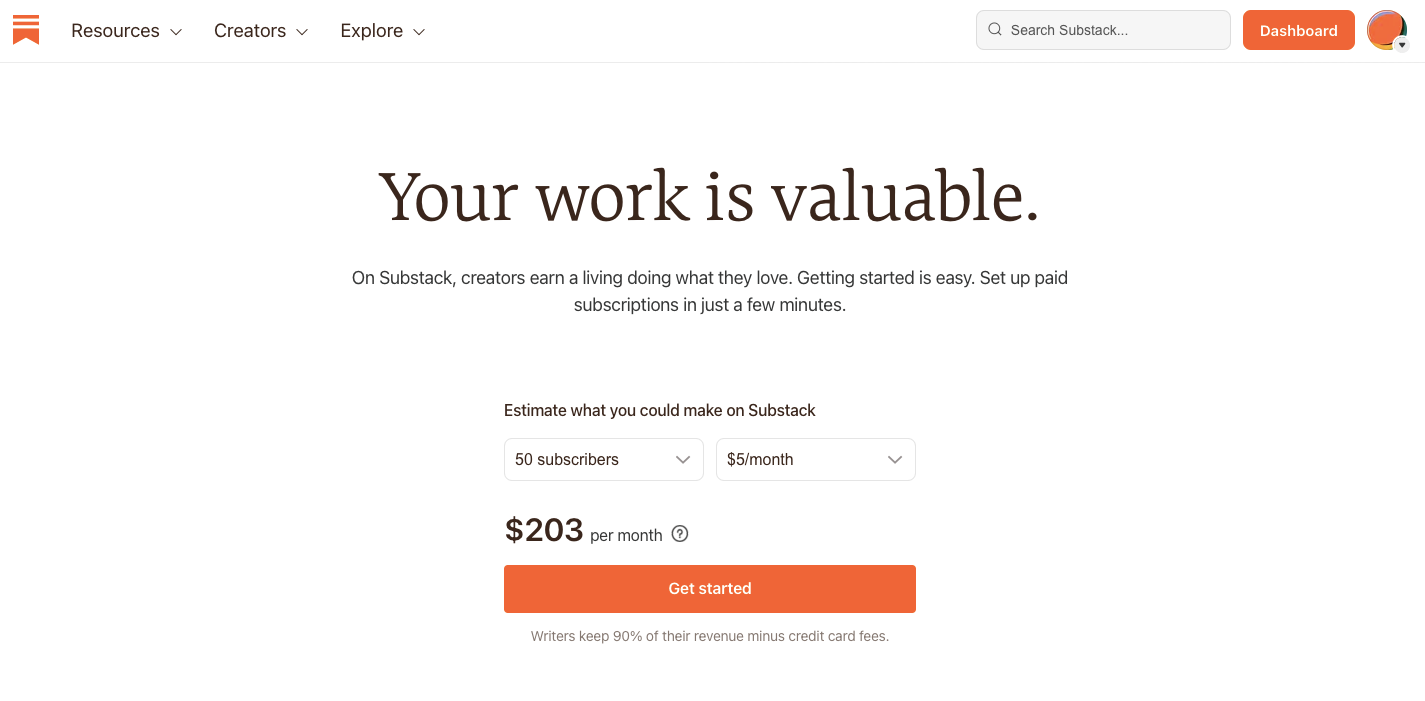
This platform comes with diverse paid plans based on subscriber and month counts. Plus, you can use this platform for free with unlimited users and subscribers. But it takes 10% of the royalty on your paid subscriptions.
Pros
Completely free and simple to use for new creators.
Allows you to get limitless subscribers without paying for anything.
Find Chats and Recommendations to discuss with your members.
The podcast option works great.
Cons
Takes 10% commission and 0.5% of billing fees for subscriptions.
Lacking customization options.
4. MailerLite
MailerLite is a powerful yet affordable email marketing platform that balances ease of use with the latest features. It’s also ideal for online marketers, small brands, and creators who want strong automation and a paid newsletter on a separate site.
Well, you’ll find all the tools to make a site to make your newsletter and store it in a portal. Plus, this lets you make it available only to paid users who pay for the content. You can also add popular payment methods to get income easily.
With this platform, you can send perfectly timed emails based on subscriber behavior, site activity, or custom triggers. This also helps you nurture leads and sales funnels.

In fact, it offers a modern and AI-powered drag-and-drop editor to design newsletters. Plus, you can change the colors, add images, or resize the text parts with no hassle. It also makes it easier for you to personalize content with its ready-made templates.
Along with that, you can make blogs, signup forms, and lead capture pages with no external tool use. It also lets you earn money by selling online products. For that, you won’t need to pay for commissions on your earnings.
Besides, it has fair and clear-cut pricing plans with no transactional fees. However, you won’t get most options like paid newsletters or limitless emails on the free plan.

While it has some downsides, this platform works fine to make content appear better with surveys, A/B split testing, and quizzes. You can also experiment to make a profit from the newsletter. Besides, it lets you use dynamic email content for target groups.
Plus, this platform lets you track sales, real-time activities, growth, and so on with its analytic tools. It also lets you get data and improve the content based on that. On top of that, this platform is a good choice to automate tasks and market emails on a site.
Top Features
Edit Emails with AI Assistant: It gives you an AI option to design newsletters or emails. You can also make content, get ideas, or outline with this.
Schedule Emails with Automation: This platform allows you to make targeted email orders on a specific time.
Make Site & Landing Page with Builders: It lets you build full sites, blogs, and landing pages to collect leads. Plus, you can promote products without extra tools.
Sell Digital Product & Newsletter: This platform allows you to sell e-books, downloads, and paid subscriptions directly. It also has its own payment options.
Integrate with Tools: You can connect with tools like Zapier, WordPress, and so on to share newsletters in the finest way.
Pricing Plan

Free Plan: $0/month with 12k monthly emails and a user seat.
Growing Business Plan: $9/month with limitless monthly emails and 3 user seats.
Advanced Plan: $18/month with limitless monthly emails and user seats
Enterprise Plan: Personalized pricing plan with limitless user seats and 100k subscribers.
Pros
Includes automation, landing page builders, and a survey maker.
Pretty simple to use for its clean UI interface.
Reasonable pricing with 500+ subscriber counts.
Allow you to make good visuals for newsletters
Cons
No option to sell digital items on the free plan.
The migration support isn’t available.
Also Read Here: 19 Best Content Creation Platforms for Content Creators
5. Kit
Kit is a decent platform for creators who want to send emails and sell digital items with paid subscriptions. Plus, it’s made to help you grow an audience, build real relationships, and monetize consistently.
If your goal is to turn subscribers into buyers without relying on social media algorithms, this platform offers a strong system. Plus, it lets you make a newsletter feed, site, landing page, and form with pre-made templates.
You can also run paid newsletters, promote other creators, and earn through email ads. Plus, it doesn’t require you to switch to other platforms or tools thanks to its own Kit store.

With this platform, you’ll find a library for images, email templates, and contacts. Besides, it has great A/B split testing to check your two to 5 email subject lines or more based on the plan. Thanks to this, you can improve the email open and click rates.
It also helps you to connect with your audience on a deeper level. Instead of blasting the same email to everyone, you can manage subscribers based on interests, actions, and purchases. Then, it allows you to send relevant content that feels personal to get conversions.
Plus, this platform comes with automation benefits to run in the background to answer queries or reach out to your members. It also helps you send the right messages at the proper time.

On the Pro plan, you’ll find A/B content testing, reporting tools, and insights on the dashboard. It also offers RSS campaigns, 100+ direct apps, and so on. However, it has around 3.5% of transactional fees with an extra 30 cents for processing charges.
In addition, you can promote other creators or newsletters in your paid recommendation. In that case, it takes up to 23.5% of the total earnings you make. So if you want to avoid these downsides, it’s better to look for an alternative.
Top Features
Connect with App Store: It lets you connect smoothly with tools like Canva, Patreon, Circle, and more to work on your content.
Make Creator Profile: This platform allows you to make a high-impact creator profile that acts as a main hub. It also stores your content and products with no site needed.
Earn with Monetization: It has multiple income options like selling online, subscriptions, referrals, email ads, and so on.
Build Real Connection: This platform allows you to reach your customers or members with customized emails. For that, you can use forms and newsletter options.
Do More Work with Automation: It has both visual and email automation with limitless template funnels. Plus, you can send a series of emails automatically.
Pricing Plan

Newsletter Plan: $0/month with 10k subscribers, 1 user, and limitless landing pages.
Creator Plan: $33/month with 1k subscribers, 2 users, apps, and limitless automation.
Pro Plan: $66/month with 1k subscribers and limitless users, A/B testing, and referral option.
Pros
Excellent for creators selling digital products.
Easy to manage paid subscriptions.
Clean and user-friendly interface.
Strong automation without complexity.
Cons
Contain transactional and processing fees.
Take a percentage on your paid recommendation revenue.
6. EmailOctopus

EmailOctopus is a simple and budget-friendly newsletter platform that works well for small businesses, bloggers, and beginners who want to send emails without any confusion. If you are someone who prefers a clean interface and easy setup, this platform can be a good choice to start your email journey.
With this platform, you can create newsletters using a drag-and-drop editor and ready-made templates. It also lets you build signup forms and landing pages to collect subscribers from the start. Thanks to its simple dashboard, you can manage your email lists, design campaigns, and send newsletters without needing technical skills.
Plus, it offers basic automation features that allow you to send welcome emails or follow-up messages automatically. You can also segment your subscribers and track performance with metrics like open rates and clicks. This helps you understand how your newsletters are performing and improve them over time.
One of the best things about EmailOctopus is its free plan. You can manage up to 2,500 subscribers and send 10,000 emails per month without paying anything. If you need more features or higher limits, the paid plans start at $9/month, which makes it one of the most affordable options available.
Top Features
Simple Email Builder: Create newsletters easily with drag-and-drop tools and customizable templates.
Basic Automation: Set up welcome emails and simple workflows to engage subscribers automatically.
Landing Pages & Forms: Build signup forms and landing pages to grow your email list.
List Segmentation: Organize subscribers into groups for more targeted email campaigns.
Performance Tracking: Monitor open rates, click rates, and campaign results with built-in analytics.
Pricing Plan
Free Plan: $0/month with up to 2,500 subscribers and 10,000 emails per month.
Pro Plan: Starts at $9/month with higher limits, advanced reporting, and better customization options.
Pros
Beginner-friendly interface
Affordable pricing
Quick setup and easy usage
Covers all essential features
Cons
Limited advanced automation
Fewer integrations compared to premium tools
7. Flodesk
Flodesk is ideal for brands and businesses that want email marketing to support both branding and selling. Plus, it’s the best for you to make on-brand emails with custom fronts, colors, and so on. This also lets you make your own newsletters.
Besides, this platform lets you make newsletters that your clients want to open and read. Instead of basic text-heavy emails, you can use premade templates to drag and drop the layouts. This also helps your emails feel familiar and trustworthy over time.
It also helps you turn newsletters into a sales channel. In fact, you can add product links, connect emails to checkout pages, and guide readers toward a purchase.

If someone clicks a product link but doesn’t buy, it can automatically follow up with an abandoned cart email. This also means your newsletter continues working even after it is sent. Plus, it helps you recover sales without manual effort.
With link-in-bio pages and forms, you can capture email subscribers from Instagram or other platforms. This platform also brings your clients into the newsletter list to connect with them. Plus, it helps you to make a strong bond with your clients.
Moreover, this platform gives you tons of tools like Canva, Shopify, Zapier, Squarespace, and so on. It also lets you just be creative to drive traffic with emails.

Furthermore, you can use sales funnels to sell online items, memberships, and services to convert profits. Plus, it has link in bio options to connect directly to social media profiles to get subscriptions.
Finally, this platform offers analytics to help you understand what works. You can also see all the insights like clicks, opens, buys, and so on. With this, it lets you make improvements to make better newsletters.
Top Features
Make Emails with Marketing: It lets you edit emails with patented layouts, fronts, colors, and other aspects. Plus, you can add countdown timers for your items to make limited deals.
Sell Online with Checkout: You can sell products directly with built-in checkout, sales funnels, and abandoned cart emails with this platform. It also lets you recover up to 15% of lost sales.
Automate Workflows on Emails: This platform lets you send emails or updates to your clients fast with automation. It also makes marketing easier on workflows.
Track Insights with Analytics: It allows you to check all the data on email campaigns, funnels, and other aspects with analytics. This platform also helps you improve conversions.
Grow Your List with Forms: This platform lets you make high-converting forms that match your brand. Plus, it allows you to add a spinner, video, and landing page forms.
Pricing Plan

Free Plan: $0/month with forms, landing pages, and no email sends.
Lite Plan: $19/month with limitless email sends, analytics, and 1 seat.
Pro Plan: $25/month with limitless workflows, analytics, and 2 seats
Everything Plan: $49/month with limitless checkouts, sales pages, and 3 seats.
Pros
Needs no code or technical skill to make customization.
Includes limitless emails for a reasonable rate.
Get proper online sales with the checkout option.
Contain a schedule option to send emails at different times.
Cons
Lacks in community and newsletter features.
Upsell and subscription options are available on higher pricing tiers.
8. GetResponse
GetResponse is a powerful marketing platform for newsletters that helps you grow, engage, and monetize your audience. This platform also offers you multiple tools, so you do not need to depend on many separate services.
Well, it gives you email marketing tools to reach out to your clients. You also get a drag-and-drop email creator to design the content without coding. Plus, it offers you ready-made newsletter templates to save time and match different marketing goals.
With send-time optimization tools like Perfect Timing and Time Travel, this platform offers you better email delivery. So, your messages reach people when they are most active.

You also get automation options to send emails manually based on user actions. Besides, it gives you a visual workflow builder to make client journeys in a few clicks. This platform also offers options like advanced triggers and web events.
Moreover, it has strong monetization tools to create and sell your content online. Besides, this platform offers separately by selling your paid newsletter and digital products directly. It also lets you get payment options like Stripe and PayPal to receive money.
But that’s not all! This platform also offers AI options to make emails, campaigns, writing, courses, and so on. It also lets you make videos, quizzes, and certificates.

This platform offers you multichannel tools like SMS marketing, web push notifications, pop-ups, landing pages, and webinars. You also get these tools to reach your members on the channels where they respond the most.
Besides, it gives you funnels to convert your clients faster. However, you’ll only get most options in higher-tiered plans. Plus, this platform has fewer SMS marketing options, like reporting and a link shortener. All in all, it is a great platform to get a return with a newsletter.
Top Features
Get Advanced Email Marketing Tools: This platform gives you strong email marketing tools to create, send, and manage newsletters easily.
Schedule Newsletter Delivery and Timing: You get autoresponders and send-time tools to manually send newsletters.
Segment Your Newsletter Audience Easily: It lets you make data-based segments so you can send more relevant newsletters.
Monetize Your Newsletter: This platform allows you to launch premium newsletters and paid subscriptions directly.
Includes Signup Pages and Forms: You get built-in landing pages, popups, and signup forms to grow your email list faster.
Pricing Plan

Starter Plan: $15/month with limitless email sends, AI assistants, and landing page builders.
Marketer Plan: $48/month with a custom domain, sales funnel, and abandoned cart.
Creator Plan: $56/month with webinars, site builder, and premium subscriptions.
Enterprise Plan: Personalized pricing plan with limitless users, SSO, and SMS marketing.
Pros
Contains no platform fees to transact or process.
Allows you to sell newsletters and get stats on revenues.
Integrate with Zapier, Shoper, WordPress, and so on.
Find an app to handle your tasks on any device.
Cons
Limited good options on lower-tiered pricing plans.
Not good for tracking with analytics.
Also Read Here: How Big Will the Creator Economy Be in 2026? (With Data & Predictions)
9. Mailchimpe
Mailchimp is one of the most popular email marketing platforms right now for new startups and businesses. As a digital newsletter site, it helps you get the CRM tools to promote your products and build client relationships.
Well, it works by letting you collect your buyer’s data, segment subscribers, and connect with them via targeted email campaigns. While you can use it to send simple newsletters, its real strength lies in automation and customer management.
Moreover, you can make welcome sequences, promotional ads, abandoned cart emails, and follow-up messages easily. Plus, it lets you do it in a minute with the AI assistant.

Not to mention that its interface is on another level, especially for newbies. Plus, this platform has a clean dashboard to navigate any tools without a guide. You’ll also find a drag-and-drop editor to easily use the pre-made templates to design your email ads quickly.
With that said, it comes with 300+ tools for you to simply connect and be creative to make the newsletter like a pro. Plus, this platform lets you manage buyer interaction to sell items, services, or digital downloads.
It also has a mobile app option for you to easily make emails anywhere, anytime. Besides, you can make your own landing pages and sites for free.

In addition to that, this platform allows you to make passive income via email marketing. Plus, you can connect with popular sites like Stripe, Canva, Zapier, and so on. With that, it lets you get onboarding support on higher price plans.
It also makes it easier for you to automate your campaigns and handle activities beforehand. But this feature is not on the free plan. Other than that, you can check the insights of your buyers with a survey option.
Top Features
Design with 130+ Templates: It offers over 130 pre-made templates to design your emails, landing pages, and marketing campaigns.
Connect with 300+ Builders: This platform supports tons of integrations with popular tools like e-commerce sites, CRMs, and website builders.
Find Intuit Assist with AI: It has Intuit Assist with AI to let you make content, outlines, topics, and so on for newsletters.
Track with Reporting Tools: This platform offers detailed analytics that give you all the insights needed to improve your newsletter.
Make & Publish Websites: It lets you build and upload a basic website or landing page directly within the platform.
Pricing Plan

Free Plan: $0/month with 500 monthly emails and 1 seat & account.
Essential Plan: $6.50/month with 5k monthly emails, 3 seats, and 3 accounts.
Standard Plan: $10/month with 6k monthly emails, 5 seats, and 5 accounts.
Premium Plan: $175/month with 150k monthly emails and unlimited & accounts.
Pros
Allows you to use the drag-and-drop option to make email ad content.
Includes marketing automation tools to speed up workflow.
Get insights from your audience with analytics.
Contain 24/7 email and chat support.
Cons
The free plan has no real options.
Sometimes the integrations don’t work.
10. Ghost
Ghost is a content-focused platform made for bloggers, writers, and independent publishers. Unlike other traditional email marketing tools, it mixes a full blogging CMS, newsletter system, and membership options into one unified solution.
To put it simply, this platform offers you complete control over your content. In fact, you can publish blog posts, send newsletters to subscribers, and offer paid memberships from the same dashboard.
With that, it comes with a clean and simple editor to design the email outlet. This platform also offers you content creation tools to make blogs as a newsletter for marketing purposes.

That being said, you’ll get a monetization option with this platform. So, it lets you simply make subscription sites, get premium newsletters, and member-only content. For that, you won’t need 3rd-party tools or apps.
Plus, if you don’t have a blog or CMS, it can replace platforms like WordPress while being lighter and faster. Thanks to this, you can make your full website with pages. Besides, you can get full guidelines to make it with no hassle.
It also comes with built-in SEO tools to let you use them in your content. This also helps your content to perform better in search engines and improve long-term growth.

Yet, this platform doesn’t offer the latest email automation to send newsletters on a bulk level. Likewise, it focuses on simple content distribution rather than complex marketing funnels. This aspect is a plus point for publishers who want to send selected emails.
Plus, you won’t find any AI assistant to simplify or quicken the task. Due to its limitations, this platform doesn’t work well for marketers. Overall, it’s ideal for creators who want to make blogs, newsletters, and memberships at once.
Top Features
Make Blog and Newsletter: It allows you to upload blog posts and send newsletters from the same system. This also helps maintain stable content without switching between tools.
Built-In Memberships: You can offer paid content directly to make it easier to monetize writing without other tools or setups.
Writing-Focused Editors: It comes with editors to remove distractions and help you write better to submit for newsletters. Plus, this is ideal for long-form writing and publishing.
SEO and Content Analytics: This platform lets you get info to do search intent, keyword research, and so on to drive traffic with the help of SEO tools.
Customization & Integrations: It supports custom themes and integrations. This platform also lets you tailor your site as the brand grows.
Pricing Plan

Starter Plan: $15/month with 1k members and 1 user.
Publisher Plan: $29/month with 1k members, 8k+ integrations, and 3 users.
Team Plan: $199/month with 10k members and 15 users.
Custom Plan: Personalized pricing plan with limitless users and members.
Pros
Ideal platform for writers or publishers to make newsletter content.
Contains tons of themes and plugins to design the email campaigns.
Paid newsletters and memberships are simple to set up.
The built-in SEO options help you find the right topics to impact.
Cons
Not ideal for marketing use due to no automation option.
Lacks features and is tough to set up for advanced uses.
Also Read Here: Top 10 Content Monetization Platforms for Creators in 2026
11. AWeber
AWeber is one of the finest email marketing platforms made for SME businesses that want to promote products or services. With this, you have all the tools to do marketing and automate tasks in emails.
Plus, it lets you make great emails with a simple editor that doesn’t need technical skills. You can also send weekly updates, product launches, or special offers to specific groups of subscribers. Plus, this makes it easier for you to get your clients back and drive sales.
Along with that, it lets you set up automatic email orders that work on their own. This platform also helps you by sending a welcome email, helpful tips, or a discount text back manually.

To help grow email lists, it has a sign-up form builder. Thanks to these, you can simply collect addresses directly from the site, ads, and social media pages. It also lets you improve the campaigns to send better newsletters.
This platform also supports e-commerce options. In fact, you can send newsletters like order confirmations, follow-up messages, or special product offers. This is also helpful for selling digital items or services to keep clients informed.
Furthermore, it comes with an AI writing assistant to help you make blogs or newsletters well. This also helps you create email text, subject lines, and ideas in less time.

It also comes with a landing page builder for you to make a site in your own way. In addition to that, this platform offers web push notifications. It also helps your subscribers to easily catch up on updates, offers, or limited deals.
With that, it comes with a Link in Bio page option that lets you share several links via one link. And, this aspect is a great trait to add to a newsletter to drive members to your social media profile. It also helps you get traffic to pages, offers, or sign-up forms.
Top Features
Market Your Newsletters via Emails: This platform lets you send newsletters to remind about updates and special offers to your members.
Speed Up the Tasks with Automation: It lets you automate emails to your clients or members with its tools. This also saves time, so you can fully focus on content and chat aspects.
Make a Landing Page with Builders: This platform allows you to make landing pages to get members on a site to show the offers and increase sales.
Write Content with AI Assistant: It has an AI assistant that you can use to make content, outlines, topics, and ideas to craft newsletters.
Sell Items with E-commerce Support: You can share your items with this support to sell items or services. It also lets you confirm orders from your clients and send follow-up emails.
Pricing Plan

Lite Plan: $12.50/month with 1 email list, 3 pages, automations, and users.
Plus Plan: $20/month with limitless email list, pages, automations, users, and so on.
Done For You Plan: $20/month + $79 setup fees with branded options.
Pros
Get drag-and-drop email builders and content blocks.
Find tons of customizable email templates to design the newsletters.
Sell items and services with the e-commerce option.
The reporting tools help to get insights.
Cons
No option to migrate for free.
Fewer options for email templates, page builders, and others on the Lite plan.
So, Which Is the Best Newsletter Platform for You?
Well, all the mentioned ones stand out in their own ways. Then again, there’s no fixed scale that we can take on the best newsletter platforms to call it at the top.
In our opinion, you should go with EzyCourse if you want all the email marketing tools, automation, content creation, course or membership selling, community building, and all-in-one traits.
But if you prefer the monetization aspect with a referral plan to send a newsletter to your dear members, Beehiiv is a great choice.
Other than that, you can try out Substack to get options to connect with your members with email tools, a free plan, and paid subscriptions.
Hope you find this guide helpful to get the finest collection of platforms to make and send newsletters. And, you can try the 30-day free trial from here to know its usefulness.


