Key Takeaways
The creator economy is on track to hit $480 billion by 2027. Over 200 million people are now content creators.
Your growth stage determines the right platform. Building an audience? Use YouTube, TikTok, Instagram, LinkedIn, X, Substack, or Spotify. Earning first revenue? Try Patreon, Gumroad, or Ko-fi. Scaling a real business? Go all-in-one with EzyCourse, Kajabi, or Thinkific.
Audience ownership is the #1 factor most creators overlook. Social platforms rent you attention: algorithms shift, reach drops, and your income vanishes overnight. Own your audience emails, data, and revenue from day one.
Percentage-based fees silently crush your margins. YouTube keeps 45% of ad revenue. Patreon takes 10%. Gumroad takes 10% + $0.50 per sale. So, look for fee-free platforms.
The smartest creators use two platforms, not one. Attract audiences on a discovery platform (YouTube, Instagram, Substack), then move them to an owned platform like EzyCourse. Here you can create and sell digital products like courses, coaching, and build communities.
Not a generic AI overview, originally researched by the author
The creator economy crossed $250 billion in 2025 and is projected to hit $480 billion by 2027, according to Goldman Sachs. Over 200 million people now identify as content creators worldwide. Yet most of them still struggle with the same question: where should I actually build?
Hundreds of platforms promise growth, engagement, and easy monetization. But few help you build something that lasts, and choosing the wrong one early can cost you months of wasted effort.
This guide breaks down the 22 best platforms for content creators in 2026, organized by your growth stage and creator type. You'll see exactly what each platform does well, where it falls short, and how to pair tools strategically so you're not rebuilding from scratch every year.
What is a content creator platform?
A content creator platform is any digital tool that helps you produce, share, and earn from your work whether that's video, writing, courses, audio, or community content. Some platforms focus on helping you get discovered. Others help you collect payments. The best ones do both.
Creator platforms generally fall into three categories:
Audience growth platforms focus on visibility and discovery. They help you reach new people through algorithms and social features. Think TikTok, YouTube, Instagram. Great for attention but the audience belongs to the platform, not you.
Monetization-first platforms are built to help you earn from an audience you've already gathered. They handle payments, digital product sales, or memberships. Think Patreon, Gumroad, Ko-fi.
All-in-one platforms combine audience engagement, content delivery, and multiple income streams in one place. They let you own your audience data, your brand, and your revenue. Think EzyCourse, Kajabi, Thinkific.
The core difference between them is ownership. On growth platforms, you're renting attention from companies that can change their algorithms overnight. On all-in-one platforms, you own the relationship with your audience directly.
How to choose the best content creation platform
Every creator's needs are different, but four factors consistently determine whether a platform helps or holds you back:
Audience ownership and data access
Do you own your audience, or does the platform? On social platforms, your followers belong to the algorithm. If reach drops or your account gets restricted, your business disappears overnight. Platforms that give you direct access to member emails, analytics, and communication channels let you build something more durable.
Monetization flexibility
Look for platforms that support multiple ways to earn subscriptions, one-time sales, courses, coaching, memberships, digital products, and events. Relying on a single income stream is risky. Creators who diversify into multiple revenue streams significantly outperform single-stream creators in annual income.
Scalability and integrations
Your platform should grow with you. If adding a new course, a membership tier, or an email campaign requires switching tools or rebuilding your setup, that's a bottleneck. The right platform handles courses, community, checkout, email, and analytics in one place or at minimum integrates cleanly with tools that do.
Fees and revenue share
Some platforms take a percentage of every sale. Others charge a flat monthly rate. A 10% fee barely matters when you're earning $500/month, but it stings at $10,000. Pay attention to processing fees, platform cuts, and transaction charges before committing.
Finally, if you're chasing reach today, social platforms work. If you're building a business that can sustain you long-term, prioritize platforms where you own the audience and keep more of what you earn.
Best platforms for content creators by creator stage
Stage A: Grow your audience (reach and discovery)

Before you can monetize, people need to find you. These platforms help you reach new followers through algorithms, search, and recommendations. They're powerful for building awareness but you're building on rented land.
1. YouTube

YouTube remains one of the best platforms for content creators for long-term audience growth. With over 2.7 billion monthly active users and its role as the world's second-largest search engine, your content can surface new viewers for years after you publish it.
The platform works especially well for educational content, tutorials, and evergreen topics. Creators like Ali Abdaal grew massive audiences through consistent, niche-focused video then channeled that audience into courses and paid communities that generate millions annually.
Monetization: Ad revenue through the YouTube Partner Program (requires 1,000 subscribers + 4,000 watch hours), channel memberships, Super Chats, and brand deals. YouTube keeps 45% of ad revenue.
Best for: Video creators who want discoverability and a long shelf life for their content.
Limitation: Growth is slow initially, competition is intense, and YouTube controls your distribution. Most successful creators eventually move their engaged viewers to an owned platform.
2. TikTok
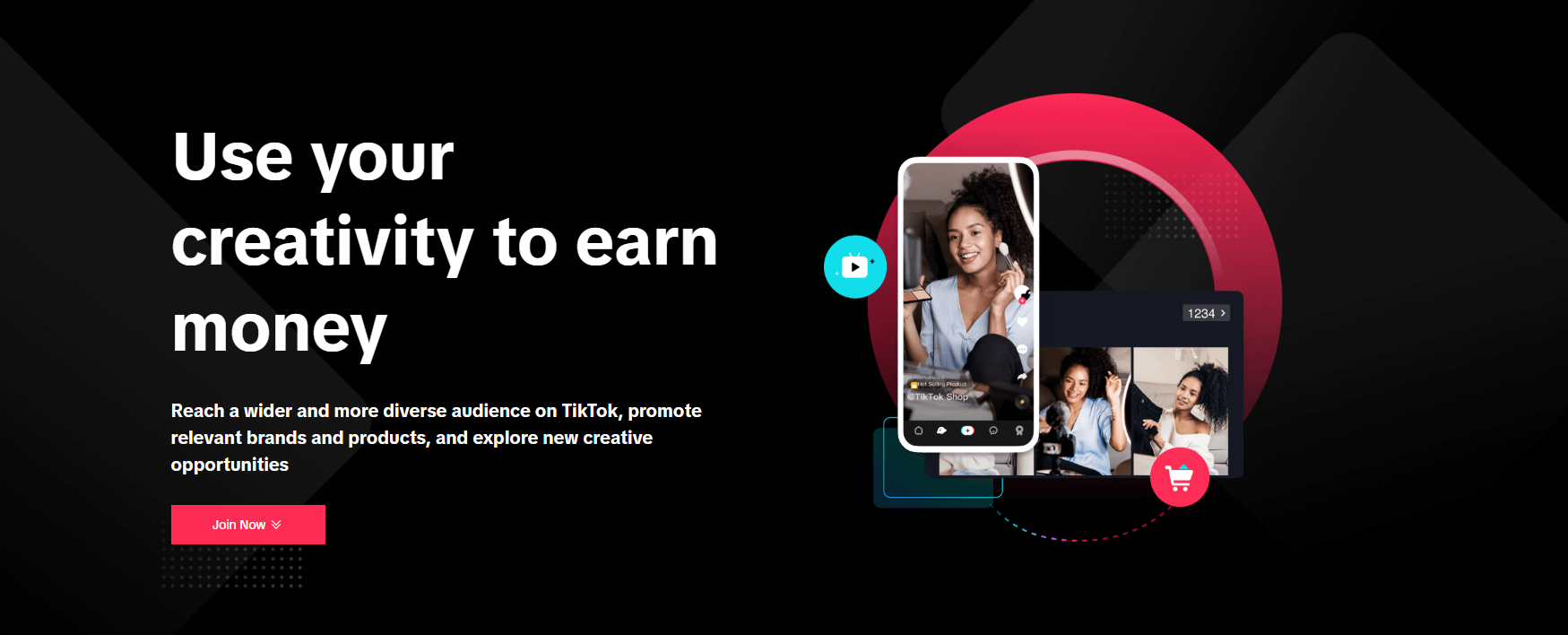
If you are searching for the best platforms for content creators to monetize videos, TikTok can be a brilliant option. TikTok's algorithm is unmatched for getting content in front of new audiences fast even if you have zero followers. Its discovery-first design means a single video can reach millions overnight.
The platform rewards creative iteration, niche consistency, and short-form storytelling. Engagement rates on TikTok average around 4.86% (Buffer), which consistently outperforms other major networks.
Monetization: TikTok Creator Fund, TikTok Pulse, brand partnerships, TikTok Shop, and live gifts.
Best for: Creators who thrive in short-form video and want rapid audience growth.
Limitation: Visibility is volatile and trend-dependent. Direct monetization options are limited compared to owned platforms. Most creators treat TikTok as a top-of-funnel discovery tool, then guide followers elsewhere.
3. Instagram
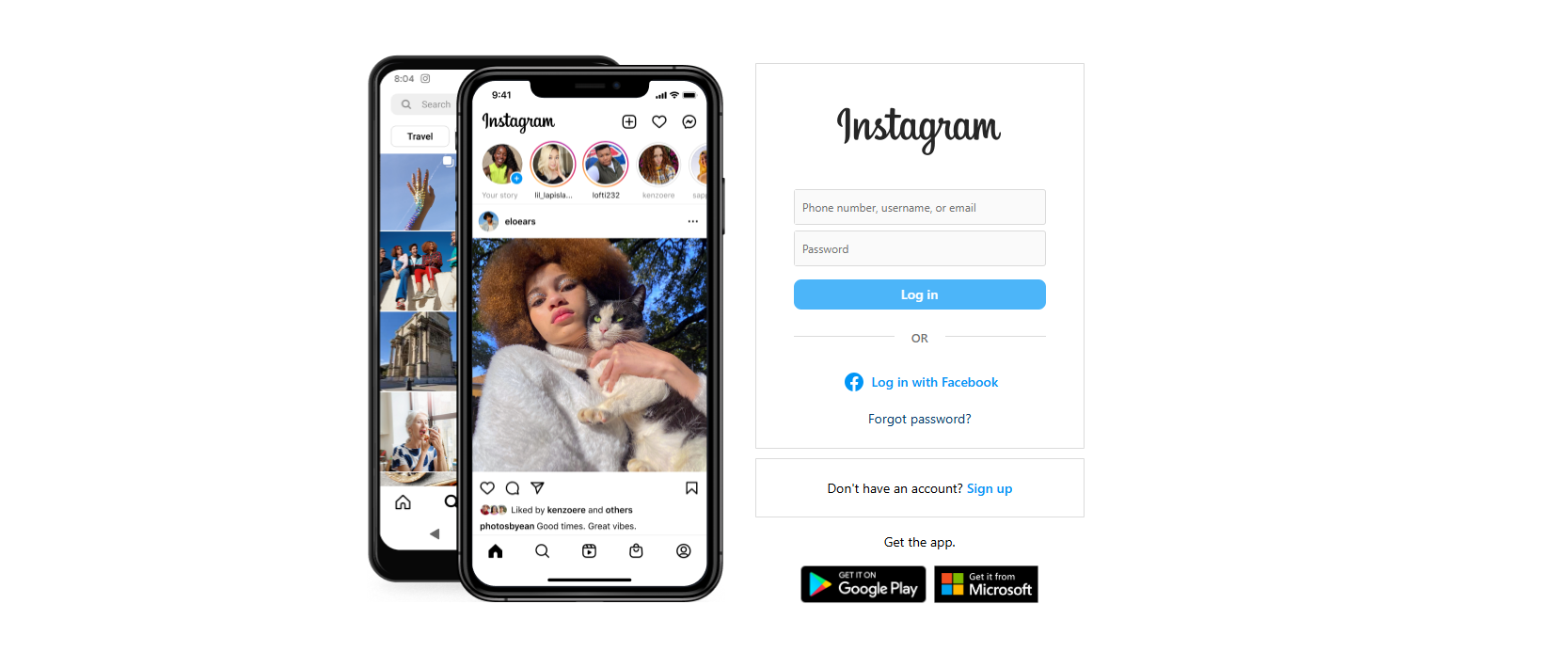
Instagram remains essential for lifestyle, visual, and personal-brand creators. Its mix of Reels, Stories, and DMs makes it strong for building real connections with your audience not just impressions.
Growth typically comes from Reels (reach), while retention comes from Stories (engagement). Broadcast Channels and Close Friends lists add a layer of community that other social platforms lack.
Monetization: Brand partnerships, affiliate links, Instagram Subscriptions (requires professional account + ~10,000 followers). Direct monetization options remain limited.
Best for: Lifestyle creators, personal brands, and anyone who builds through visual storytelling and direct audience relationships.
Limitation: Revenue options are thin. Instagram works best for staying visible and building trust but you'll need an owned platform to convert that attention into real income.
4. Substack

If writing is your medium, Substack is one of the most effective platforms for growing a dedicated readership. It delivers newsletters straight to inboxes, cutting through the noise of social feeds.
Discovery happens through Substack's recommendation network, topic feeds, and social shares. Growth is slower than algorithm-driven platforms, but the audience quality tends to be much higher people subscribe because they genuinely value your thinking.
Monetization: Free and paid subscriptions (Substack takes 10% of paid subscriber revenue + payment processing fees).
Best for: Writers, journalists, analysts, and niche experts building a newsletter-first audience.
Limitation: Discovery is limited. You need patience and an existing audience or cross-promotion strategy to gain traction.
5. LinkedIn

LinkedIn has quietly become one of the most powerful organic reach platforms for B2B creators, consultants, and professional thought leaders. Creator Mode unlocks newsletters, video, and article publishing, and the algorithm currently favors authentic, value-rich content over polished corporate posts.
You can share learning journeys, industry opinions, or behind-the-scenes experiences. This visibility attracts job offers, collaborations, speaking gigs, and brand deals. Creators like Sahil Bloom and Justin Welsh have built six-figure businesses primarily through LinkedIn content.
Monetization: No direct monetization tools. But LinkedIn drives leads for consulting, coaching, courses, and services more effectively than any other social platform. Brand sponsorships and partnerships come through visibility and niche authority.
Best for: Career-focused creators, coaches, consultants, and thought leaders targeting a professional audience.
Limitation: Limited direct monetization. Algorithm and reach can fluctuate. Balancing authenticity with professionalism takes practice. That means going too casual or too salesy pushes your audience away.
6. X (Twitter)

X remains the platform where ideas spread fastest. One well-crafted thread or hot take can reach millions through retweets, replies, and quotes, making it unmatched for building a personal brand through conversation.
The platform rewards consistency, sharp thinking, and quick engagement with trending topics. Educational threads, witty one-liners, and contrarian takes tend to perform best. Creators like Naval Ravikant and Ali Abdaal have built massive followings and launched businesses through their X audiences. Recently, a 15-year old school boy made $30K in 2 weeks by setting up OpenClaw; he got all his clients from X.
Monetization: Ad revenue sharing (for verified users with strong engagement), tips, paid subscriptions for exclusive content, brand partnerships, and affiliate marketing.
Best for: Thought leaders, journalists, and creators who build through real-time conversation and network effects.
Limitation: Content decays fast. Tweets have a shelf life of hours, not days. Monetization requires verification and significant engagement. High competition for attention.
7. Spotify (for podcasters)

Spotify for Podcasters makes it easy to record, edit, distribute, and monetize audio content to a global audience. The platform automatically distributes your episodes across devices and regions, and its algorithm recommends your show through personalized feeds and playlists.
Beyond distribution, Spotify provides detailed analytics: listener demographics, retention rates, and engagement insights that help you refine your content and attract sponsorships.
Monetization: Ads and sponsorships embedded in episodes, Spotify Audience Network for programmatic ads, paid subscriptions for subscriber-only episodes, and listener support.
Best for: Podcasters, audio storytellers, and musicians who want global reach without technical hosting setup.
Limitation: Audio-only format. Creative control can be limited under exclusive deal structures.
Stage B: Earn your first revenue (monetization tools)

Once you have an audience, these platforms help you start earning. They handle payments, product delivery, and basic membership management though they're not designed to be your long-term business infrastructure.
8. Patreon

Patreon works well for creators who publish ongoing content and want to offer premium access through membership tiers. Podcasters, video creators, and writers use it to charge $3–$50+/month for bonus content, behind-the-scenes access, or community perks.
Fees: 10% platform fee (for creators who joined after 2019) + payment processing (~2.9% + $0.30 per transaction).
Best for: Creators with a loyal, engaged audience willing to pay for exclusive content on a recurring basis.
Limitation: Income depends heavily on consistent posting and subscriber retention. Monthly churn can make earnings unpredictable. Not ideal for creators who want to build a diversified business beyond subscriptions.
9. Gumroad
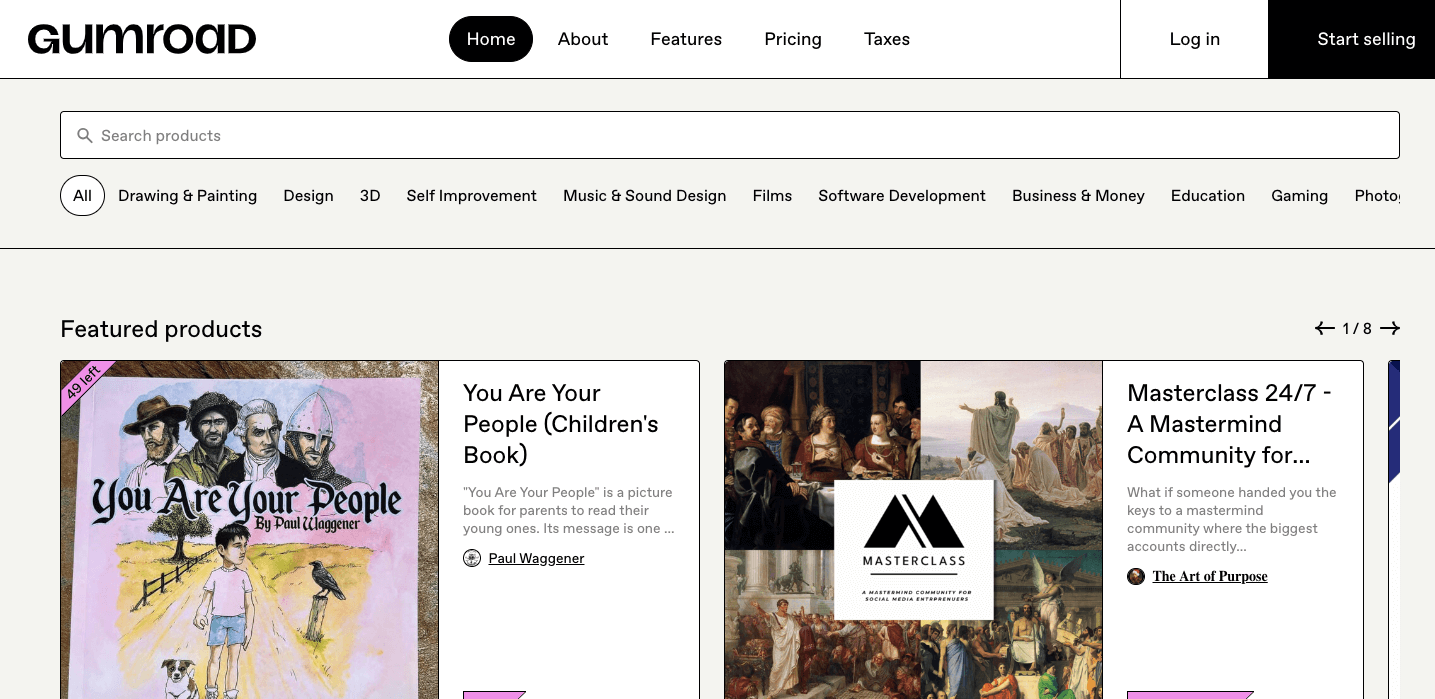
Gumroad is built for creators who want to sell digital products templates, eBooks, courses, video packs directly to their audience. Setup is minimal: upload your product, set a price, share the link.
Fees: 10% + $0.50 per direct sale. 30% per sale through Gumroad's marketplace. Since January 2025, Gumroad handles global sales tax as merchant of record.
Best for: Creators selling one-off digital products who want simplicity over infrastructure.
Limitation: Discovery is essentially nonexistent. You need to drive all traffic yourself. The fee structure gets expensive at higher volumes.
10. Ko-fi

Ko-fi lets fans support you through one-time tips, recurring memberships, product sales, and commissions. It's one of the lowest-friction ways to start earning from creative work.
Fees: Free tier charges 5% on all transactions. Gold tier ($12/month) drops that to 0%.
Best for: Creators testing monetization for the first time, or those who want a simple "support me" option alongside their main platform.
Limitation: Revenue tends to be supplementary rather than sustainable. Works best as a complement to a more robust platform, not a replacement.
Stage C: Scale your business (all-in-one platforms for course creators and community owners)

This is where serious creators build lasting businesses. All-in-one platforms let you combine courses, communities, memberships, email marketing, and payments in one place so you stop juggling tools and start compounding growth.
11. EzyCourse

EzyCourse is an all-in-one platform built for course creators who want to run their entire business from one dashboard. It combines course creation, community building, membership sites, coaching, email marketing, and checkout without needing separate tools for each.
What sets it apart from other all-in-one platforms is its affordable pricing with premium features. You get branded mobile apps (iOS + Android) for free with selected plans.
The platform supports 20+ revenue streams including courses, memberships, digital/physical products, coaching sessions, appointments, events, and community subscriptions. Payment processing supports multiple currencies with zero platform transaction fees on all plans.
Pricing: Essential ($55/month yearly) → Pro ($129/month yearly) → Unlimited ($189/month yearly) → Elite ($279/month yearly). 14-day Free trial available.
Best for: Course creators, coaches, and educators who want maximum features at a competitive price point, especially those who'd otherwise need 3–5 separate tools.
Limitation: No free plan available.
👉 Start your free trial with EzyCourse and build your creator business in one place
12. Kajabi

Kajabi is a well-established all-in-one platform for creating, marketing, and selling online courses and digital products. It offers a website builder, email marketing, sales funnels, and a branded mobile app.
The platform is polished and beginner-friendly, with solid course templates and a built-in AI assistant (Creator.io) for content ideas. Integrations with Shopify let you sell physical products alongside digital ones.
Pricing: Basic ($143/month yearly) → Growth ($199/month yearly) → Pro ($399/month yearly).
Best for: Established creators who prioritize a polished, premium feel and are willing to pay more for it.
Limitation: Pricing is significantly higher than comparable platforms. Limited storage on lower tiers. Community features are less developed than dedicated community platforms.
13. Thinkific

Thinkific focuses specifically on online course creation and delivery. It offers live lessons, quizzes, assignments, certificates, and a branded mobile app plus a free plan that lets you create one course and one community with unlimited students.
The platform integrates with a wide range of third-party tools through its App Store, and its sales features (bundles, coupons, cross-selling) are solid for course-focused businesses.
Pricing: Basic ($36/month yearly) → Start ($74/month yearly) → Grow ($149/month yearly) → Plus (custom pricing).
Best for: Educators and course creators who want a dedicated, straightforward course platform without the complexity of a full business suite.
Limitation: Basic plan lacks email automation and community customization. Marketing tools are basic compared to all-in-one competitors. Gamification features are available only with add-ons.
14. Teachable

Teachable makes it simple to create and sell structured online courses. Its drag-and-drop builder, built-in payment processing, and support for 130+ currencies make it accessible for creators worldwide.
The platform supports one-time payments, subscriptions, bundles, abandoned cart recovery, and upsells. You can connect third-party live streaming tools (YouTube, Twitch, Adobe Connect) for live sessions.
Pricing: Starter($29/month) → Builder ($69/month) → Growth ($139/month) → Enterprise (custom).
Best for: Educators who want simple, structured course delivery without heavy setup.
Limitation: Transaction fees on free and lower plans erode margins. Marketing tools are limited. No built-in community features comparable to all-in-one platforms.
15. Mighty Networks

Mighty Networks is built around community-first content creation. It lets you combine courses, memberships, live streams, and discussions in a branded space with iOS and Android apps.
The platform's Mighty Co-Host AI helps with course outlines, landing pages, and content ideas. Members can also share their own content, which makes the community feel more interactive than most course platforms.
Pricing: Launch ($79/month yearly) → Scale ($179/month yearly) → Growth ($354/month yearly) Mighty Pro (custom).
Best for: Community-focused creators who want members to actively participate, not just consume.
Limitation: Marketing tools are limited. Transaction fees (2% on the Launch plan) apply to all plans.
Niche and specialty platforms

16. Vimeo
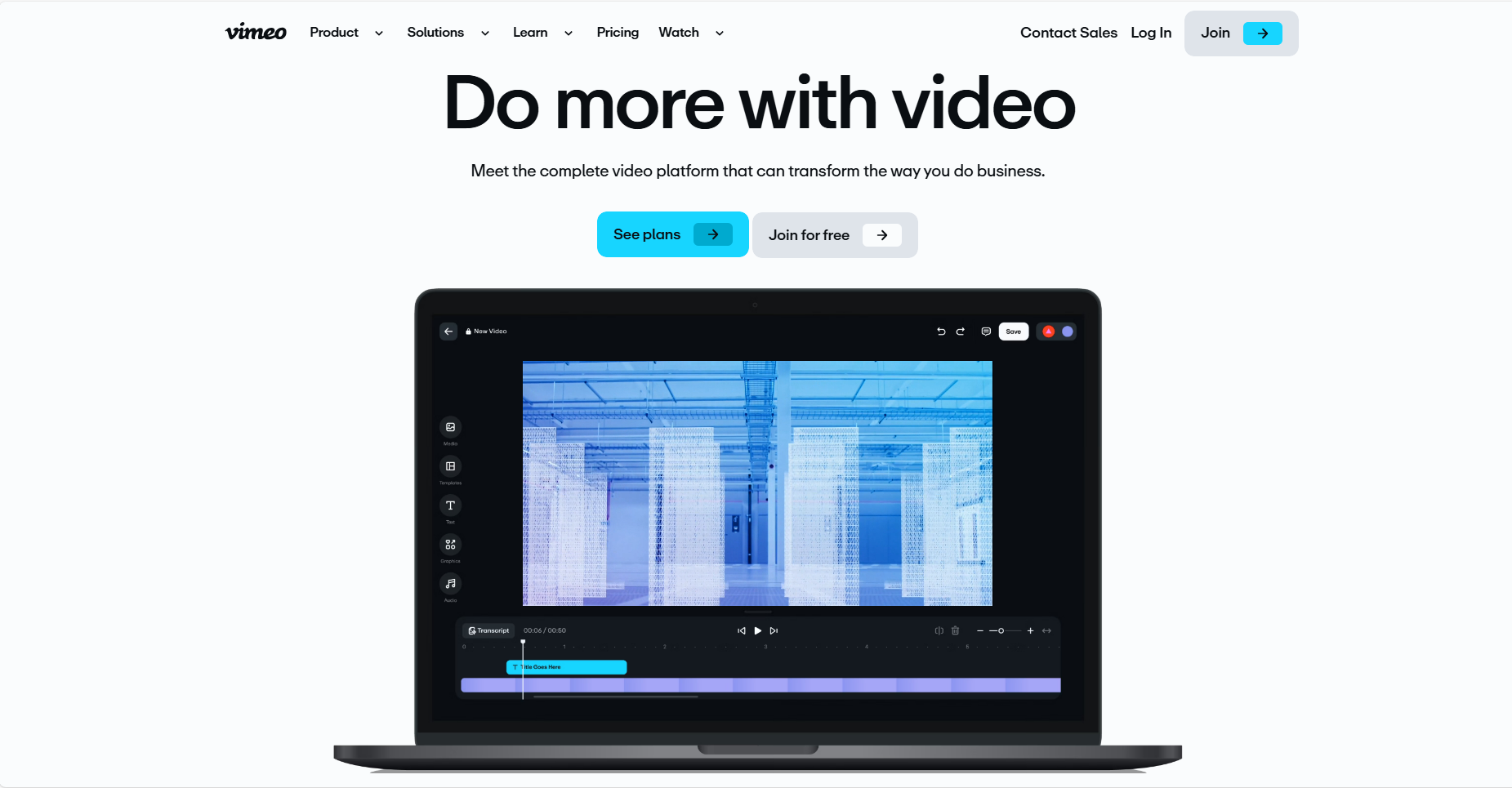
Vimeo is a premium, ad-free video hosting platform that supports 4K streaming, live events, and privacy controls. It's designed for creators who want professional-grade video delivery without the clutter of YouTube's algorithm and ads.
Pricing: Starter ($12/month yearly) → Standard ($25/month yearly) → Advanced ($75/month yearly) → Enterprise (custom).
Best for: Video creators, filmmakers, and educators who need high-quality hosting with monetization through VOD, subscriptions, or pay-per-view.
Limitation: Discovery is nonexistent you need to bring your own audience. Lower-tier plans are very limited.
17. Patreon + YouTube combo
Many creators find the best results by pairing platforms rather than relying on one. YouTube handles discovery and audience growth; Patreon handles monetization through paid memberships and exclusive content.
This combo works especially well for podcasters, video essayists, and educational creators. Use YouTube to attract new viewers, then funnel your most engaged fans to Patreon for recurring revenue.
Best for: Creators who want free, algorithm-powered growth (YouTube) combined with predictable recurring income (Patreon) without the commitment of an all-in-one platform yet.
Limitation: You're still building on two rented platforms. Neither gives you full ownership of your audience data or a unified brand experience.
18. Facebook Groups
Facebook Groups remain one of the easiest ways to build a community around your content especially for creators targeting audiences aged 30+. The platform offers live streaming, events, polls, and marketplace integration at zero cost.
Pricing: Free.
Best for: Creators who need a low-barrier community space and are comfortable with Facebook's ecosystem.
Limitation: You don't own your audience Facebook does. Reach is increasingly pay-to-play. No native monetization beyond third-party integrations. Template and customization options are nonexistent. Many creators eventually migrate their communities to owned platforms for more control and revenue flexibility.
Content production tools worth knowing
These aren't platforms you build your business on. Actually, they're tools that make your content better and faster. Most successful creators use one or more of these alongside their main platform.
19. Canva is the go-to for visual content. With 60,000+ templates, AI design tools, and brand kits, you can create social graphics, presentations, thumbnails, and marketing materials in minutes. Free plan covers most needs; Pro ($12.99 per month) adds 10x more AI, background remover, brand kits, and premium assets.
20. ChatGPT accelerates writing, ideation, and content repurposing. Use it to brainstorm topics, draft outlines, write scripts, generate social captions, or restructure existing content. It won't replace your voice, but it cuts production time significantly. Free tier is solid; ChatGPT Pro ($5/month) and Plus ($20/month) add more power.
21. Claude (by Anthropic) is one of the most efficient LLMs right now. There are multiple features of Claude, i.e, Chat, Cowork, and Code. It's a strong tool for developers.
Moreover, Claude works great especially for long-form writing, research-heavy content, and nuanced editing. It handles detailed analysis, document review, and structured content creation particularly well. Many creators use Claude for blog drafts, editorial rewrites, content strategy planning, and turning raw notes into polished pieces. Free tier available; Pro ($17/month) adds extended context and priority access.
22. VEED is a browser-based video editor built for speed. Auto-captions in 100+ languages, background noise removal, and AI-powered editing make it ideal for repurposing long-form content into short clips for TikTok, Reels, or YouTube Shorts. Creator plans start at $20/month.
Best platforms for content creators by creator type
Different types of creators need different tools. Here's a quick breakdown by category:
Course creators and educators
Start with EzyCourse or Thinkific if your primary revenue comes from structured courses. EzyCourse gives you the broadest feature set at the most competitive price courses, community, coaching, memberships, branded app, and marketing tools all included. Thinkific is a solid choice if you want a simpler, course-only focus with a free starter plan.
Video creators
Use YouTube for discovery and long-term search traffic. Pair it with Vimeo for premium, ad-free hosting of paid content. You can also use VEED to repurpose long-form videos into short clips.
Writers and newsletter creators
Start with Substack or Medium to build a dedicated readership. Use LinkedIn and X to amplify reach and drive subscribers. Once you've validated paid demand, consider moving subscribers to an owned platform where you can combine written content with courses, membership, and community features for higher lifetime value.
Podcasters and audio creators
Use Spotify for Podcasters for free hosting and global distribution. Build your audience through consistent episodes and cross-promote on X and YouTube (video podcasts). When you're ready to monetize beyond ads, move your most engaged listeners to EzyCourse or Patreon for premium memberships and exclusive content.
Coaches and consultants
EzyCourse handles coaching workflows natively 1:1 and group coaching, appointment booking, membership sites, and drip-fed content. Kajabi is another strong option if you prefer a more polished interface and don't mind the higher price.
Related: Best online coaching platforms
Community builders
If community is your core product, Mighty Networks gives you the community-first experience. But if you want community plus courses, products, email, and marketing in one platform, EzyCourse covers all of that without needing separate tools.
Which platform pays creators the most?
The platforms that pay the most aren't necessarily the ones with the highest traffic they're the ones that let you keep the largest share of your revenue while supporting multiple income streams.
Here's how the major platforms compare:
YouTube: Creators keep 55% of ad revenue. At a typical $5 RPM, you'd need ~200,000 monthly views to earn $1,000/month. High-value niches can see $15–$20 RPM, cutting that requirement significantly.
Patreon: Platform takes 10% + processing fees (~2.9% + $0.30). To net $1,000/month, you need roughly $1,150–$1,200 in gross pledges around 200 patrons at $6/month.
Gumroad: Takes 10% + $0.50 per direct sale. Selling a $20 product means ~56 sales/month to clear $1,000.
EzyCourse: Charges a flat monthly fee with zero transaction fees on all plans. At $55/month (Essential), your only costs are the subscription + payment processing. Every dollar your students pay goes directly to you minus standard Stripe/PayPal processing. Hitting $1,000/month could mean 10 members at $100 or 50 at $20 and it's all happening inside a platform you fully own.
Final few words
The best platforms for content creators isn't one single tool it depends entirely on where you are in your journey.
If you're building an audience from scratch, start with discovery platforms like YouTube, TikTok, or Instagram. When you're ready to earn your first revenue, tools like Patreon or Gumroad get you started quickly. And when you're ready to build a real business with courses, community, memberships, email marketing, and checkout all in one place that's where all-in-one platforms like EzyCourse earn their value.
The creators who scale fastest are the ones who stop renting attention and start owning their audience. They consolidate tools, build recurring revenue, and invest in platforms that grow with them.
👉 Start your free trial with EzyCourse and run your entire creator business
FAQs about content creator platforms
What is the best platform for beginner content creators?
Start with free discovery platforms like YouTube, TikTok, or Substack to test ideas and grow your first audience. These platforms have built-in algorithms that can surface your content to new people without any upfront cost. Once you've built momentum and know what your audience will pay for, move to an owned platform like EzyCourse where you can monetize through courses, memberships, and community.
Which platform pays content creators the most?
Platforms with flat monthly fees and zero transaction fees like EzyCourse let you keep the most revenue as you scale. Percentage-based platforms like Patreon (10%), Gumroad (10% + $0.50), and YouTube (45% of ad revenue) take larger cuts as your income grows. The highest-earning creators typically combine a discovery platform (YouTube, TikTok) with an owned all-in-one platform where they sell directly to their audience.
Can you make a full-time living as a content creator?
Yes, but the data shows it requires intentional diversification. Over 50% of creators earn less than $15,000/year, and only about 4% cross $100,000 annually, according to industry research. The creators who reach full-time income typically build 3+ revenue streams courses, memberships, digital products, coaching, and brand partnerships rather than depending on a single platform's ad revenue or algorithm.
What's the difference between a creator platform and social media?
Social media platforms (YouTube, TikTok, Instagram) are designed for content distribution they help you reach people. Course creator platforms (EzyCourse, Kajabi, Thinkific) are designed for content (courses, coaching) monetization they help you earn from people. The biggest difference is ownership: social platforms own your audience data and control your reach through algorithms. Creator platforms give you direct access to your members, their emails, and your revenue.
How do you choose between an all-in-one platform and multiple specialized tools?
If you're just starting out, a single specialized tool (like Teachable for courses or Patreon for memberships) keeps things simple. But as you add more revenue streams, managing 3–5 separate tools creates friction disconnected data, multiple subscriptions, and a fragmented experience for your audience. All-in-one platforms like EzyCourse eliminate that by combining courses, community, coaching, email, checkout, and analytics in one place. The tradeoff is a steeper initial learning curve, but the long-term operational savings are significant.
What content creation tools should I use alongside my platform?
Most successful creators use 2-3 production tools alongside their main platform. Canva for visual design (graphics, thumbnails, social posts), ChatGPT or Claude for writing and ideation (outlines, scripts, captions, research-heavy drafts), and VEED for video editing (repurposing, subtitles, short clips). These tools speed up production without replacing your creative voice.